

For decades, most end-of-line packaging work, especially palletizing, has been done entirely by hand. But nowadays, a host of economic and social challenges are pushing packaging factories worldwide to change this old way of working. No longer are factory leaders debating whether they should automate palletizing operations. Instead, everyone is focused on figuring out the right time and the best way to make the switch. This article breaks down how soaring labor costs and other market shifts are driving more factories to adopt advanced palletizing equipment, including High-Speed Palletizer and smart Palletizing Robot solutions that upgrade everyday end-of-line packaging work.
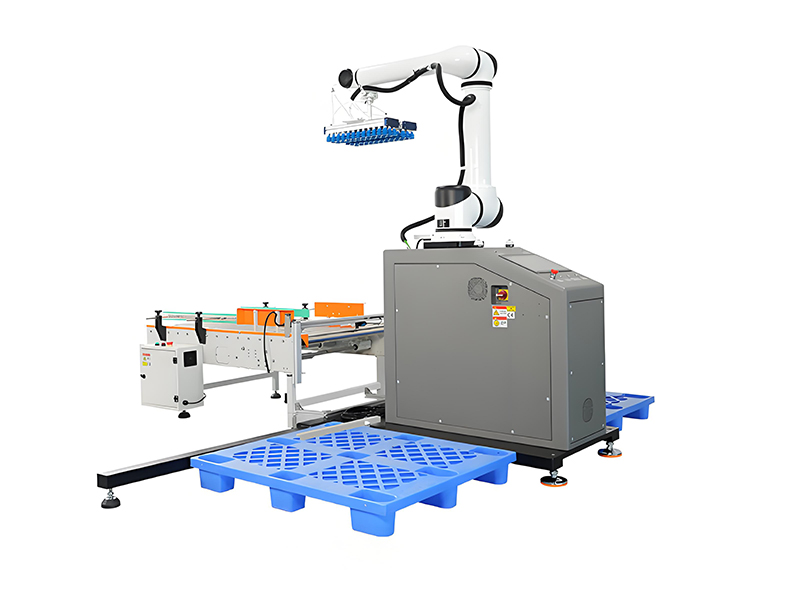
The Labor Shortage Crisis:a Why Warehouses Are Switching to Automation
The global packaging industry is stuck in a growing labor crunch. Shifting population demographics, the tiring, repetitive physical work of palletizing, and job competition from other industries have all made it extremely hard to find and keep reliable manual workers. On top of that, rising minimum wages and the need to offer better benefits to hire staff have greatly bumped up factory operating costs.
Hand palletizing is not just expensive — it also creates consistency and safety issues. Workers get tired over shifts, so output levels fluctuate constantly. This makes production results unpredictable. What’s more, repeatedly lifting heavy boxes easily causes muscle and joint injuries, leading to workplace compensation claims and unplanned work downtime. On top of that, human workers struggle to stack pallets accurately enough for the complex, mixed-product pallet layouts that retailers now commonly require.
All these issues make automatic palletizing systems a smart, cost-effective choice for factories. While Industrial Palletizing Robot and other automated palletizing equipment require a noticeable upfront investment, they deliver clear long-term cost benefits. Businesses running return-on-investment calculations are now seeing faster payback cycles, as the cost of relying on manual labor keeps climbing year after year. Automating palletizing is no longer a fancy upgrade for large-volume factories — it’s a must-have for any plant that wants stable operations and steady growth.
More Than Just Labor Savings: The Full Benefits of Palletizing Machines
Many people only focus on how palletizing machines cut labor costs, but that misses their full value. These devices bring wide-ranging improvements that boost nearly every part of logistics and supply chain performance.
First off, they deliver steady, reliable output. A High-Speed Palletizer can run nonstop 24/7 at a fixed, optimal speed. It eliminates end-of-line production bottlenecks and lets factories get the most out of their upstream packaging equipment. This stable output is key to meeting tight shipping deadlines and keeping up with just-in-time delivery requirements.
Secondly, automated systems stack goods with far better accuracy and protect product quality. Palletizing machines follow preset programs to build ultra-stable, tightly packed pallets, which prevents goods from shifting during transportation. This greatly cuts down on damaged products, customer complaints and material waste — a major cost saving that many factories overlook. Precise pallet stacking also makes full use of truck space, lowering shipping costs for every single product unit.
Finally, automation makes factory floors much safer. By replacing workers in heavy, repetitive lifting tasks and keeping staff away from high-risk machinery areas, factories drastically reduce workplace injuries and long-term physical strain on employees. This lowers insurance fees, helps companies meet modern ESG standards, and creates a better workplace culture — one where workers oversee smart machines instead of doing exhausting manual labor. This is a core advantage of rolling out standardizedIndustrial Palletizing Robot systems in manufacturing and logistics sites.
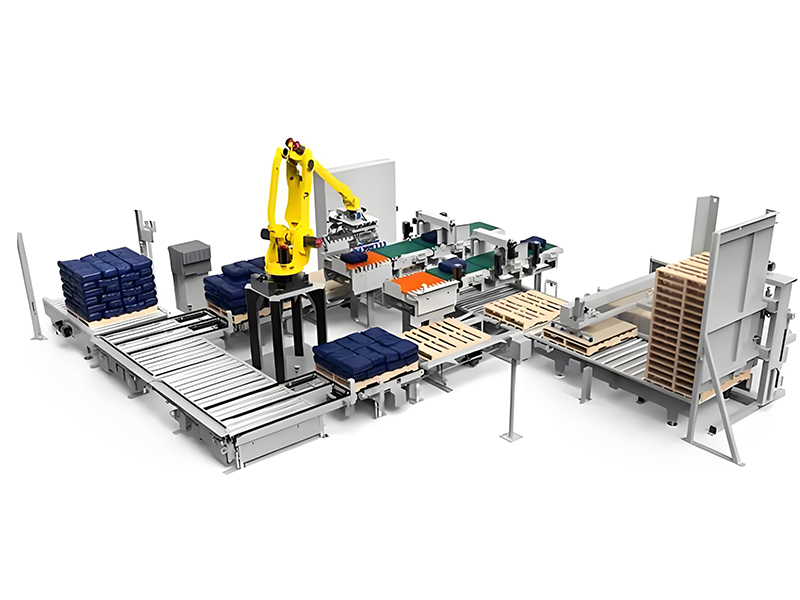
Picking the Right Equipment: High-Speed Palletizers vs. Palletizing Robots
“Palletizing machines” cover a variety of devices, each designed for different production scenarios. Knowing their differences is essential to making a worthwhile investment.
Traditional gantry or column-style case palletizers are the go-to option for high-volume production with single product types. These machines use mechanical arms or forks to lift layers of uniform boxes from conveyor belts and stack them neatly on pallets with great speed and reliability. For factories churning out thousands of identical boxes every hour, a High-Speed Palletizer is the most efficient and practical solution.
For factories needing more flexibility, robotic palletizers are the better choice. Fitted with advanced vacuum, clamp or hybrid grippers and guided by 3D vision technology, a Palletizing Robot arm can handle products of different sizes, shapes and weights on the same production line. It can build mixed-product pallets, adapt to new products simply by updating its program, and work well in limited factory space. Though its single-cycle speed is slightly lower than dedicated case palletizers, its outstanding versatility makes it perfect for today’s low-volume, mixed-batch production and fast-paced e-commerce fulfillment centers.
When choosing between these two systems, factories need to consider product diversity, required production speed, available floor space and long-term development plans. More and more plants are adopting a hybrid model: using a High-Speed Palletizer to handle most standard box stacking tasks, and deploying a flexible Industrial Palletizing Robot for special orders and customized pallet stacking needs, balancing maximum productivity and operational flexibility.
The Future of Palletizing: Smart Connectivity and Intelligent Operations
The next upgrade for automatic palletizing systems lies in stronger connectivity and built-in smart technology. Modern palletizing equipment is no longer standalone automation devices. Instead, they connect seamlessly with warehouse management systems (WMS) and manufacturing execution systems (MES), receiving real-time updates on pallet stacking rules, delivery destinations and order priorities.
AI and machine learning are also being widely integrated into palletizing equipment. Smart systems can now analyze product data on their own to work out the sturdiest, most space-saving pallet stacking patterns, and keep optimizing their performance over time. Predictive maintenance technology monitors machine component wear and arranges maintenance in advance, avoiding unexpected production downtime. Meanwhile, upgraded vision systems allow smart Palletizing Robot units to handle randomly placed or slightly damaged boxes, reducing the need for manual intervention and improving overall operational stability.
This upgrade turns ordinary palletizing equipment into key data collection points in smart factories, providing valuable data insights into production line efficiency, product circulation and equipment operating status.
Palletizing Automation Is Inevitable and Accelerating
Switching to automatic palletizing systems is an unstoppable trend in the packaging industry, driven by the universal need for better efficiency, higher safety and superior product quality. While most factories make the change mainly to solve labor shortages and rising labor costs, automation delivers far more strategic value beyond cost savings.
Investing in a Palletizing Robot or a High-Speed Palletizer helps factories build more resilient operations, more flexible supply chains and smarter data-driven management. As technology evolves, Industrial Palletizing Robot systems will become even more flexible, intelligent and interconnected, making automation an increasingly valuable investment. For packaging industry leaders, the focus is no longer on whether to adopt palletizing automation, but on how to choose and deploy the right system to keep their factories competitive in the automated era. The age of manual palletizing is fading out, and the new era of smart, connected palletizing automation is fully here — solving the industry’s labor pain points and driving continuous industrial upgrading.