

Every day, I receive customer inquiries: “How do I choose between standard and heavy-duty End Of Line Packaging?” Actually, the core concern is always the same: fear of wasting money, fear of product damage due to inadequate packaging, and fear of inefficient production caused by mismatched equipment. Today, I’ll explain it in plain language—read it in 10 minutes, and no matter if you’re in food and beverage, pharmaceuticals, or 3C electronics, you can accurately match your needs and avoid all pitfalls.
What is End Of Line Packaging? Don’t Confuse It with Regular Packaging
Many customers confuse End Of Line packaging with the product’s own small packaging. Let’s clarify it once and for all: End Of Line packaging refers to the entire final packaging process after products leave the production line—packing, carton packing, sealing, labeling, and palletizing. Its core purpose is to protect products and ensure they safely reach customers without being damaged.
It is not the product’s own small packaging (such as snack bags or mobile phone boxes, which are called primary packaging), nor the box that holds several small packages together (secondary packaging). Instead, it is the “final protective coat” before products leave the factory, directly determining the integrity rate of products during logistics and warehousing.
How to Choose End Of Line Packaging Equipment? Don’t Mix Them Up!
End Of Line packaging cannot do without end of line packaging machines, but the equipment used for standard and heavy-duty packaging is completely different. Never step into the trap of “using standard equipment for heavy-duty packaging”!
Standard End Of Line packaging is designed for light-load, non-fragile products. It uses conventional and lightweight equipment—ordinary Erector Machines, sealer machines, and Strapping Machines. The focus is on speed and cost-effectiveness, making it suitable for mass shipments. For example, the automatic sealer used in the food and beverage industry can seal 30-50 cartons per minute.
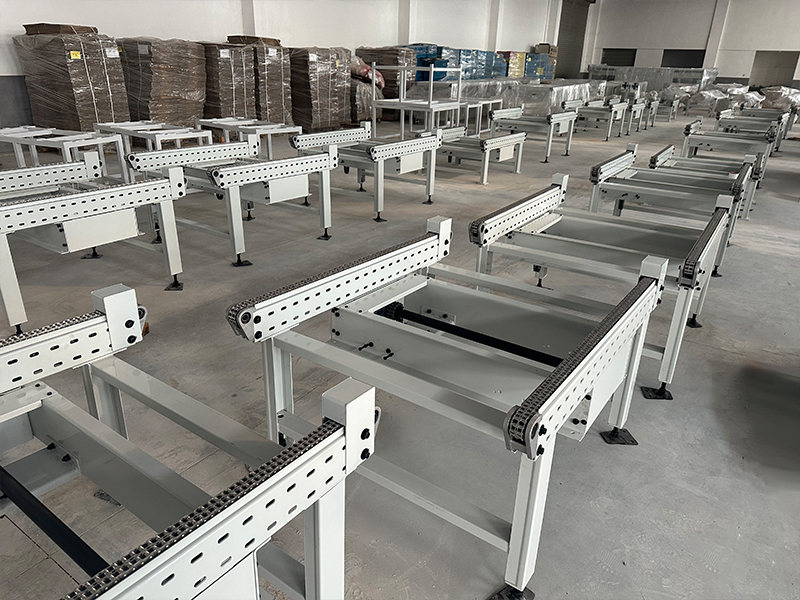
Heavy-duty End Of Line packaging is used for heavy-load, fragile products (such as industrial components and precision instruments). It must use special heavy-duty equipment—heavy-duty palletizer machines, reinforced conveyors, and special sealer machines. These can handle thick materials and heavy loads; otherwise, the equipment is prone to damage and the packaging will not be firm.
Standard vs Heavy-Duty End Of Line Packaging: Core Differences at a Glance
There is no “better” option between the two—only the “more suitable” one. The core differences are summarized in 4 points in plain language, easy to understand at a glance:
1. Materials: Standard packaging uses 3-layer corrugated cartons and ordinary strapping tape, which are lightweight and cheap; heavy-duty packaging uses 5-layer corrugated cartons, honeycomb cartons, and special PET strapping tape, which are reinforced and durable. Some can also be treated for moisture and static resistance.
2. Suitable Products: Standard packaging is suitable for products with a single carton weight ≤20kg and non-fragile (daily necessities, small 3C products, snacks); heavy-duty packaging is suitable for products with a single carton weight ≥50kg, fragile, or requiring long-distance transportation (industrial parts, medical equipment, large home appliances).
3. Cost: Standard packaging has low initial investment and consumable costs, suitable for small and medium-sized customers with limited budgets; heavy-duty equipment and materials are expensive, but they can greatly reduce the damage rate, making them more cost-effective in the long run.
4. Efficiency: Standard packaging is fast, 30-50 cartons per minute, suitable for rapid shipments; heavy-duty packaging has complex processes and slow speed, suitable for small-batch, high-demand customers.
Complete End of Line Packaging System: A Convenient and Efficient Choice
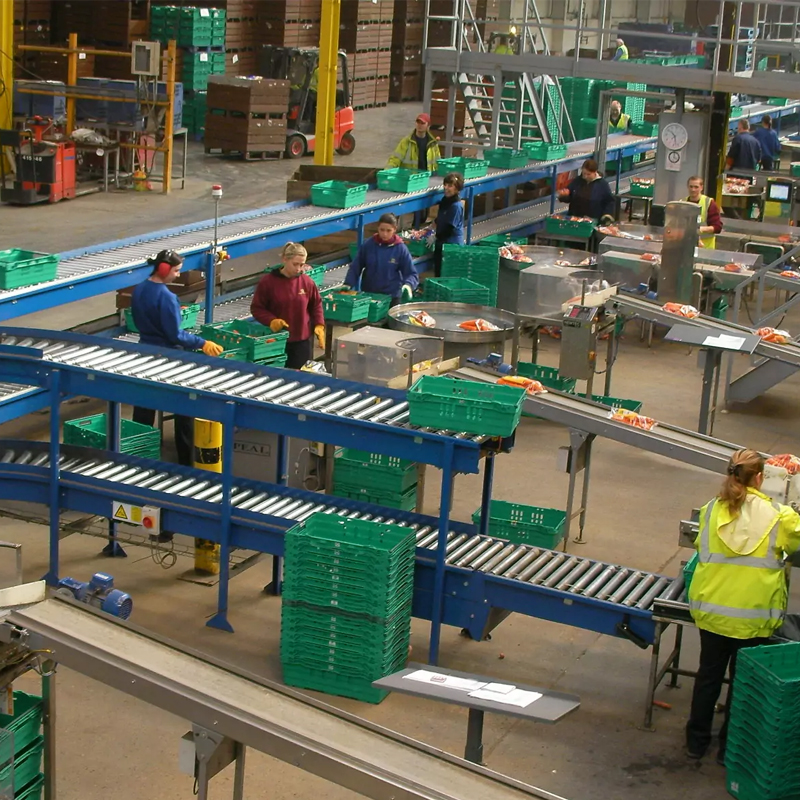
Many customers initially buy equipment separately, but end up with incompatibility and frequent jams, which is even more troublesome. A complete end of line packaging system integrates equipment, materials, and processes, achieving one-stop service from product offline to Palletizing Robot and outbound, maximizing efficiency.
The standard system focuses on high efficiency and low cost, equipped with conventional equipment, suitable for light-load and rapid shipments; the heavy-duty system focuses on stability and safety, equipped with special equipment and customized materials, suitable for heavy-load and high-protection needs.
We are Wuxi Transfo Intelligent Packaging Co., Ltd., deeply engaged in End Of Line packaging automation for many years. Relying on Wuxi’s advantages in intelligent manufacturing, we provide one-stop services from R&D, design, equipment production to integration, commissioning, and after-sales service. Whether you need a single piece of equipment (such as an erector machine, carton packer machine, etc.) or a complete system, we can customize it to adapt to various industries such as food and beverage, pharmaceuticals, and 3C electronics. Our equipment uses high-quality components and an independently developed intelligent control system to help you reduce costs, improve efficiency, and achieve intelligent transformation of packaging.
How to Choose Without Stepping Into Pits?
In a nutshell: For small, non-fragile products with short-distance transportation, choose standard packaging—it’s cost-effective and efficient; for heavy-load, fragile products with long-distance transportation, choose heavy-duty packaging—it’s safe and worry-free.
If you’re still not sure, don’t panic. Contact us at Wuxi Transfo directly. We will match you with the most suitable End Of Line packaging solution and equipment according to your product weight, specifications, and budget, so you don’t waste money and make packaging more convenient and efficient!