

I talk to food industry customers most often, and I find that what everyone cares about most is End Of Line Packaging (EOL Packaging) – after all, it’s the last line of defense for food from the factory to consumers, and it can’t be taken lightly at all! Let me first introduce our company: Wuxi Transfo Intelligent Packaging Co., Ltd. is deeply rooted in the field of post-packaging automation. Taking advantage of Wuxi's strengths in intelligent manufacturing, we provide a full-chain service covering R&D, design, manufacturing, integration, commissioning, and after-sales maintenance. We focus on customized automation solutions for various industries, from single equipment units to complete line integration. Our core focus is on key processes such as erector machine, carton packer machine, sealer machine, strapping machine, palletizer machine, and wrapping machine – which are closely linked to the End Of Line Packaging (EOL Packaging) we’re talking about today. Our equipment is adaptable to various packaging formats across industries including food and beverage, pharmaceuticals, and 3C electronics, featuring high precision, high stability, and high flexibility. We adopt high-quality components and a self-developed intelligent control system to help customers reduce costs, increase efficiency, and achieve intelligent transformation in packaging. Unlike other industries, every piece of equipment for End Of Line Packaging (EOL Packaging) in the food industry, from End of line packaging machine to Case Sealer and Palletizing Robot, must meet standards. Otherwise, you’ll let down consumers, and you might also step into compliance pitfalls and lose costs. Today, I’ll use plain language to talk to you about the special requirements of the food industry for End Of Line Packaging – all are practical tips that customers often ask about and we actually use!
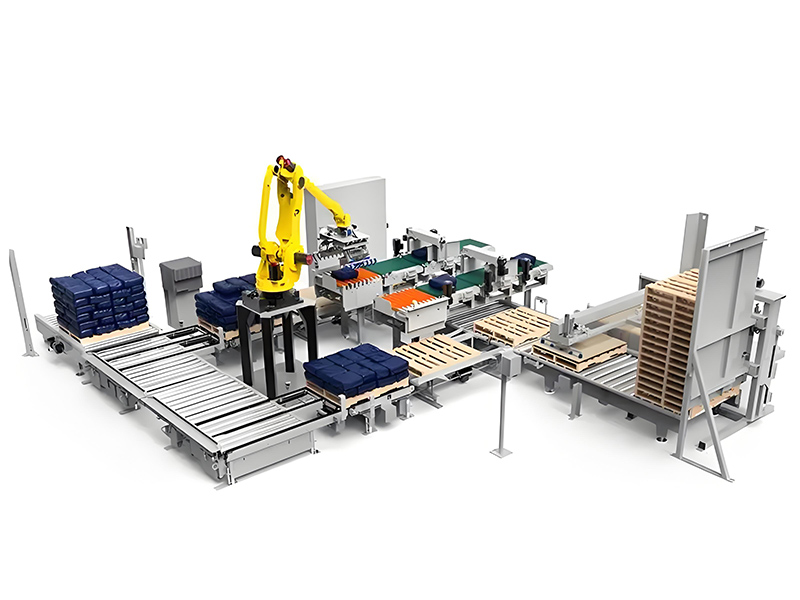
Hygiene and Sanitation Must Be In Place: End Of Line Packaging (EOL Packaging) Equipment Must Be "Spotlessly Clean"
Everyone in the food industry knows that hygiene is the lifeline! If there’s a hygiene problem with End Of Line Packaging (EOL Packaging), the entire batch of goods may be ruined, and the loss is not small. So whether it’s End of line packaging machine, Case Sealer, or Palletizing Robot, they must be made of food-grade materials, such as 304/316 stainless steel, which is corrosion-resistant, does not breed bacteria, and is easy to clean. The equipment design must also be exquisite, with no hygiene dead corners, seamless welding and rounded corner design, so that residues don’t hide in the gaps; the joints of Palletizing Robot must be sealed, and the lubricant must also be food-grade to avoid contaminating food. In addition, regular cleaning and disinfection are indispensable, and it’s best to be compatible with high-pressure spraying, so that cleaning is convenient and thorough, and hygiene standards are maintained throughout the process.
Compliance Can’t Be Compromised: End Of Line Packaging (EOL Packaging) Must Meet Global Standards
The food industry is strictly regulated, especially for customers doing export business, who are even more troubled by compliance. End Of Line Packaging (EOL Packaging) must comply with international standards such as FDA 21 CFR, EU PPWR, and HACCP, otherwise, export will be blocked, fines will be imposed, and even product recalls will occur, resulting in great losses. For example, when End of line packaging machine and Palletizing Robot are in operation, cross-contamination must be avoided, and the equipment must have food contact certification; the EU PPWR now prohibits the use of PFAS (what everyone calls "forever chemicals") and requires packaging to be recyclable, while the FDA requires End Of Line (EOL) systems to be traceable and have complete records. In addition, the adhesive used in Case Sealer must be non-toxic, and all End Of Line (EOL) equipment must be verified to ensure compliance, so that you can avoid detours.
Protecting Products Means Making Money: End Of Line Packaging (EOL Packaging) Must Keep Freshness and Prevent Damage
For those of us in the food industry, if the products we work so hard to produce are damaged or deteriorated during transportation due to inadequate End Of Line Packaging, it’s a huge loss! So the core of End Of Line Packaging (EOL Packaging) is to protect products and keep them fresh. Whether it’s perishable, frozen food or fragile products, End of line packaging machine must be adjusted properly to handle them gently without squeezing or damaging; Case Sealer must seal tightly, not leak air or water, to block moisture, oxygen and pollutants. Palletizing Robot is also very critical – stacking boxes evenly and stably to prevent shifting and breaking during transportation, which leads to product deterioration. For frozen and refrigerated food, the End Of Line Packaging (EOL Packaging) system should preferably have temperature control, so as to maintain product quality throughout the process.
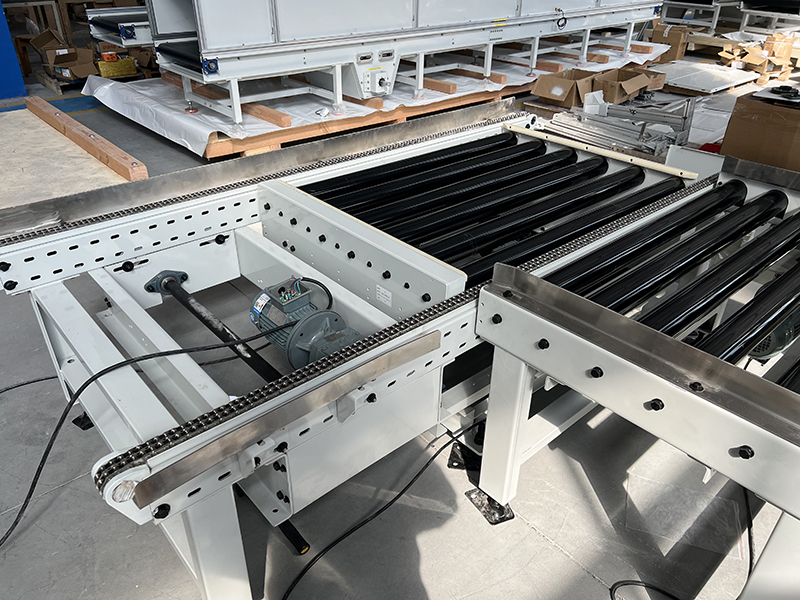
Environmental Protection Is a Major Trend: End Of Line Packaging (EOL Packaging) Must Keep Up with Sustainable Rhythms
Nowadays, whether it’s regulatory requirements or consumer preferences, environmental protection has become an unavoidable topic, and the food industry is no exception. The sustainability of End Of Line Packaging (EOL Packaging) has become an important reference for customers when choosing equipment. For example, the EU PPWR stipulates that all food packaging must be recyclable by 2035, and also puts forward requirements for the minimum recycled content of plastic packaging, which directly affects the output of End of line packaging machine. Case Sealer should use environmentally friendly adhesives and materials, and Palletizing Robot can optimize the stacking method to use less packaging materials and reduce waste. In addition, the End Of Line Packaging (EOL Packaging) system should preferably support reusable packaging, which not only conforms to the circular economy but also helps everyone save costs.
Flexibility Is Practical: End Of Line Packaging (EOL Packaging) Must Adapt to Multi-Category Production
Many food customers engage in multi-category and multi-SKU production – making bags one moment, bottles the next, and boxes the next, with different sizes and shapes. If the End Of Line Packaging (EOL Packaging) system is too rigid and gets stuck when changing products, it will seriously affect efficiency. So End of line packaging machine must be able to change models quickly to adapt to different product forms; Case Sealer must be adjustable to seal boxes of any size; Palletizing Robot must be programmable to handle different stacking modes and load weights. In this way, it can be easily adapted to both small-batch manual products and large-scale mass production without delaying production.
Traceability Brings Peace of Mind: End Of Line Packaging (EOL Packaging) Must Track Every Batch of Goods
The food industry is most afraid of safety issues. Once a problem occurs, being able to trace quickly and recall in time can reduce losses and maintain brand reputation. And End Of Line Packaging (EOL Packaging) is the key link in traceability. End of line packaging machine and Palletizing Robot must be able to record data, such as batch numbers, production time, and packaging parameters; Case Sealer can paste traceability code labels for easy query; the entire End Of Line (EOL) system should preferably be synchronized with MES (Manufacturing Execution System) and WMS (Warehouse Management System), so that the flow process of each batch of products can be clearly tracked. In this way, even if a problem occurs, it can be quickly located and handled in a timely manner, and you can feel at ease.