

You know how stuff gets moved around in warehouses and docks? That whole world is changing—and fast. At the heart of it all is the telescopic belt conveyor. It used to be pretty basic: just a way to reach deeper into trucks or containers. But today? It’s become something much smarter, more efficient, and seriously flexible.
With everyone trying to speed up delivery times, handle more online orders, and do more with fewer workers, these conveyors are getting better every year. In this article, we’ll break down the latest tech that’s making telescopic conveyors smarter and stronger. We’re Wuxi Transfo Intelligent Packaging—and we’re here to show how these upgrades aren’t just cool features. They’re real solutions that boost performance, keep people safe, and save money across the board.
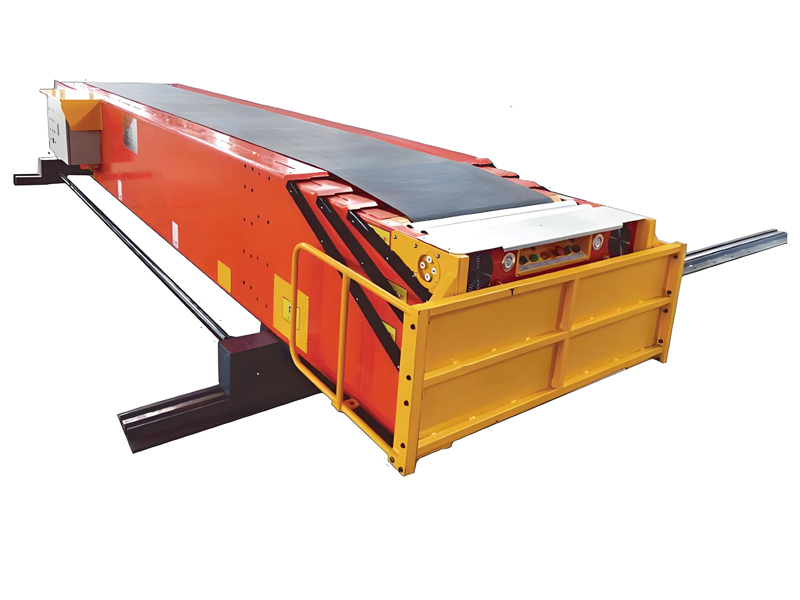
I. The Rise of Intelligent Control and Automation Integration
The most significant leap forward in telescopic belt conveyor design lies in its brain, not just its boom. Modern systems are transitioning from manual push-button controls to fully integrated automated logistics nodes.
Advanced programmable logic controllers (PLCs) and human-machine interfaces (HMIs) now offer precise, repeatable positioning. Operators can program multiple extension/retraction sequences for different truck or container sizes, eliminating guesswork and reducing cycle times. Furthermore, integration with Warehouse Management Systems (WMS) and Enterprise Resource Planning (ERP) software is becoming standard. This allows a telescopic conveyor system to receive instructions directly from the central logistics command. It can automatically extend to a predetermined position based on the specific loading bay and transport vehicle assigned, synchronizing its operation with upstream and downstream conveyor lines for a seamless, uninterrupted material flow.
Sensor fusion is key to this intelligence. LiDAR, ultrasonic sensors, and 3D vision systems are being deployed to create a safety and optimization bubble around the conveyor. These sensors can map the interior of a truck, detect obstacles or personnel in the path, and even automatically adjust the conveyor's height and orientation to match the uneven bed of a container, maximizing fill efficiency and preventing product damage.
II. Advancements in Mechanical Design and Modularity
While control systems get smarter, the physical architecture of the extendable belt conveyor is also seeing substantial refinement. The goal is greater durability, flexibility, and easier maintenance.
Innovations in belt technology are paramount. Low-friction, anti-static, and easy-clean top covers are now common, crucial for industries like food and pharmaceuticals. Some manufacturers are introducing segmented or "finger" belts for the boom section, which offer superior flexibility and longevity when constantly extending and retracting over rollers. The drive systems are also evolving. Decentralized, vector-controlled drives placed along the boom provide smoother acceleration and torque control compared to traditional central drum motors, reducing belt wear and energy spikes.
Modularity is a major trend. Leading companies design telescopic conveyor for packaging and parcel handling with a building-block approach. Buyers can configure systems with specific belt widths, boom lengths (often now exceeding 30 meters), and lift mechanisms (scissor lifts, hydraulic columns) to fit their exact dock geometry and operational needs. This modularity extends to add-ons like side transfer units, belt turners, and weighing systems, transforming a simple extending conveyor into a multifunctional dock automation cell.
III. Enhanced Ergonomics and Operator-Centric Safety Features
Technological innovation is intensely focused on the human element. A telescopic belt conveyor is a powerful piece of equipment operating in a dynamic environment shared with workers. New features prioritize operator safety and comfort, directly impacting productivity and reducing workplace injury risks.
Ergonomic control is a prime example. Wireless pendant remotes with intuitive graphical displays allow operators to control the system safely from the optimal vantage point, not from a fixed panel. Some remotes feature "one-touch auto-retract" functions that safely stow the conveyor in a predefined sequence. Haptic feedback and audible warnings alert operators of actions like maximum extension.
The integration of advanced safety systems goes beyond mandatory emergency stop buttons. Light curtains and laser scanners create invisible protective fields along the length of the boom. If breached, the system can slow down or stop immediately. Interlocked physical guarding and non-slip walkway platforms on the boom itself are now designed into premium models, allowing for safer inspection and maintenance. These features make the modern telescopic conveyor system not just a tool, but a collaborative partner in the warehouse environment.
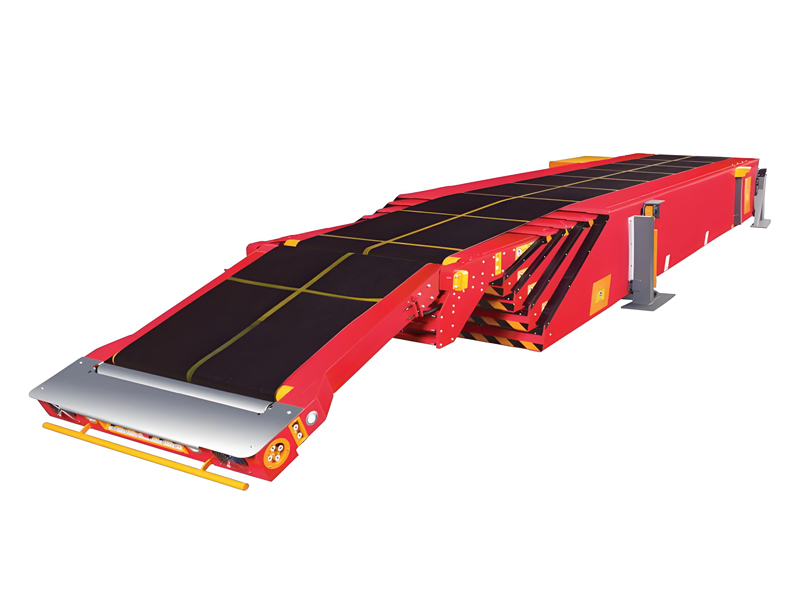
IV. Sustainability and Energy Efficiency in Focus
As industries worldwide commit to reducing their carbon footprint and operational costs, the energy profile of material handling equipment is under scrutiny. Innovators in the telescopic belt conveyor market are responding with eco-conscious engineering.
Regenerative drive technology is a game-changer. When the conveyor retracts or lowers a loaded belt, the motors can act as generators, feeding energy back into the building's electrical grid or capacitor banks. This significantly reduces net energy consumption, particularly in high-cycle operations common in parcel distribution hubs. Furthermore, high-efficiency IE4 or IE5 class electric motors are becoming the standard, minimizing losses.
Design choices also contribute to sustainability. The use of lighter, high-strength materials like advanced aluminum alloys reduces the inertial mass the drive system must move, requiring less power. LED lighting along the boom for interior truck illumination consumes a fraction of the energy of traditional halogen lamps. By optimizing the total cost of ownership to include energy spend, these innovations make the extendable belt conveyor a financially and environmentally smarter long-term investment.
V. The Future Trajectory: Connectivity and Predictive Analytics
The frontier for telescopic belt conveyor technology lies in connectivity and data analytics, paving the way for Industry 4.0 smart factories and distribution centers.
Modern systems are equipped with Industrial Internet of Things (IIoT) gateways, enabling constant data streaming on performance metrics: motor temperature, belt tension, cycle counts, energy consumption, and error codes. This data is aggregated on cloud platforms where advanced analytics software identifies patterns. The result is a shift from preventive to predictive maintenance. Instead of servicing the telescopic conveyor for packaging on a fixed schedule, algorithms can predict bearing wear or belt degradation before failure occurs, scheduling maintenance during planned downtime and preventing costly operational disruptions.
Looking ahead, we can anticipate deeper integration with autonomous mobile robots (AMRs) and robotic truck loading/unloading systems. The telescopic conveyor system will act as a fixed, intelligent transfer point, coordinating its movements with a fleet of mobile robots to fully automate the dock interface without human intervention. Furthermore, the application of digital twin technology—creating a virtual, real-time replica of the physical conveyor—will allow for advanced simulation, performance optimization, and remote expert troubleshooting from anywhere in the world.
Conclusion
The humble telescopic belt conveyor has been transformed by a wave of technological innovation. It is no longer a simple mechanical arm but a core component of the digital, automated, and sustainable supply chain. From intelligent automation and ergonomic safety to energy regeneration and predictive data analytics, the latest advancements in telescopic conveyor systems are delivering tangible gains in efficiency, safety, and reliability. As logistics demands continue to intensify, the extendable belt conveyor will undoubtedly continue to evolve, solidifying its critical role as the dynamic and intelligent link between the warehouse and the world.