

The global palletizing machine market is undergoing a geographic shift, with APAC as its core growth engine holding around 40% market share and seeing further expansion. Driven by booming e-commerce, industrial policies and rising labor costs, palletizing equipment now operates in integrated automated packaging lines together with case erectors and sealers. Wuxi Transfo Intelligent Packaging Co., Ltd. analyzes regional growth drivers, tech trends and competition, with three intact keywords: Palletizing Robot, Robot Palletizing Machine and Robotic Palletizer.
Core Growth Drivers
APAC’s surging demand for automated palletizing stems from economic and consumption changes.
First, accelerated industrialization and policy incentives. APAC nations upgrade manufacturing facilities, while China’s Smart Manufacturing Plan promotes logistics automation including Palletizing Robot, Robot Palletizing Machine and Robotic Palletizer. Automation has become both an economic necessity and policy target.
Second, the e-commerce and logistics boom. Post-pandemic online retail reshaped logistics networks. Warehouses adopt palletizing equipment for stable cargo stacking; over 45% of global box sealer demand comes from this sector, greatly boosting purchases of Robotic Palletizer, Palletizing Robot and Robot Palletizing Machine.
Third, growing labor costs and workforce shortages. Manual palletizing is labor-intensive, inconsistent and injury-prone. Palletizing Robot, Robot Palletizing Machine and Robotic Palletizer cut labor reliance, reduce safety risks and deliver 24/7 stable high-speed production with favorable ROI.
Integrated Palletizing Automation Ecosystem
Modern packaging lines rely on coordinated equipment instead of standalone units.
Upstream integration: Case erectors and sealers feed uniform cartons to Palletizing Robot, Robot Palletizing Machine and Robotic Palletizer, eliminating manual transfer bottlenecks. The USD 1.2 billion 2024 global case erector market expands alongside palletizing automation.
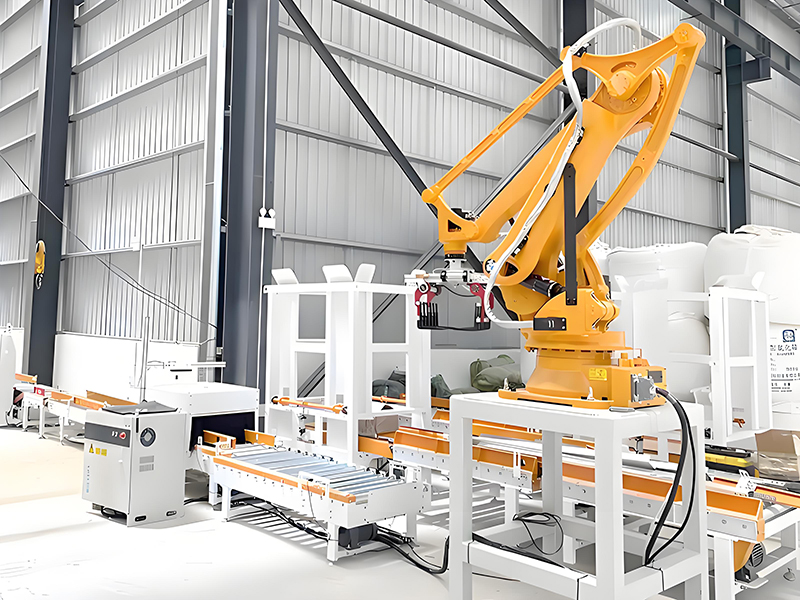
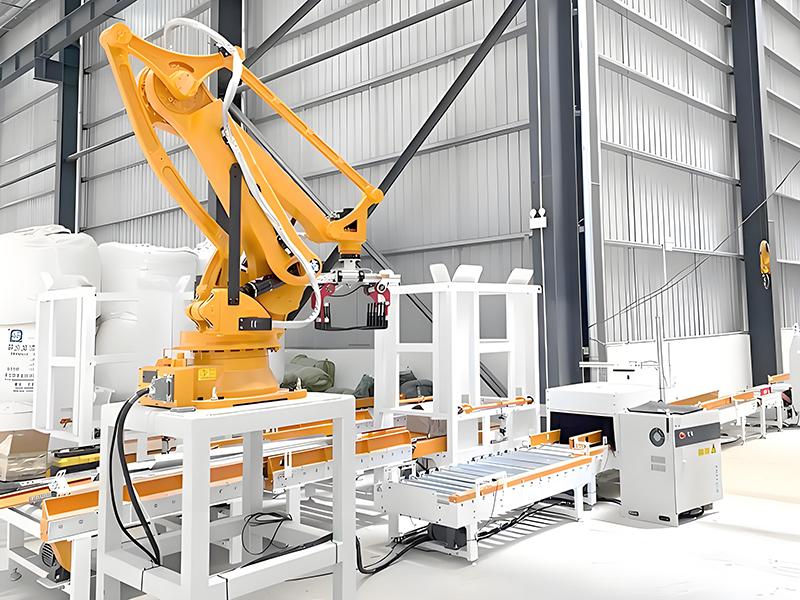
Robotic palletizing dominates growth: Traditional fixed palletizers still exist, yet Palletizing Robot, Robot Palletizing Machine and Robotic Palletizer stand out for flexibility and easy integration. Fitted with grippers and machine vision, they handle mixed-size goods for APAC’s diverse production lines, and collaborative models enable safe human-machine interaction with flexible redeployment.
Downstream integration: Stretch wrappers stabilize pallet loads post-stacking. APAC consumed 6.4 million wrapping machines in 2024, proving Palletizing Robot, Robot Palletizing Machine and Robotic Palletizer as vital links in automated material handling chains.
Regional Market & Competition
APAC boasts vibrant supply and demand with global and local rivals.
China leads regional production, manufacturing 85% of APAC’s packaging machinery and exporting worldwide. Local manufacturers innovate rapidly, narrowing the tech gap with European and Japanese brands and supplying cost-effective and advanced Palletizing Robot, Robot Palletizing Machine and Robotic Palletizer.
Major demand markets include China, India and Malaysia. Top adopting industries are food & beverage (largest share), pharmaceuticals (fastest growth) and consumer electronics.
Competitors such as FANUC, ABB and domestic firms shift from hardware sales to all-in-one “equipment + software + service” solutions. Market success requires competitive pricing, localized customization, after-sales support and seamless integration between carton equipment and Palletizing Robot, Robot Palletizing Machine and Robotic Palletizer.
Future Outlook
Valued at USD 2.92 billion in 2025, the global palletizer market will grow at 5.20% CAGR to 2035, with APAC as the main growth contributor and rising demand for the three robotic palletizer keywords.
Next-generation Palletizing Robot, Robot Palletizing Machine and Robotic Palletizer integrate AI and IoT: AI optimizes stacking patterns and fixes errors; IoT enables predictive maintenance and remote monitoring, while machine vision lifts flexibility and quality control.
SMEs face high upfront investment and maintenance skill shortages, yet new models like equipment leasing and RaaS lower entry barriers. Post-pandemic supply chain resilience demands keep intelligent palletizing systems top of corporate investment lists.
Conclusion
APAC’s leading position in palletizing automation mirrors its robust industrial growth. Supported by industrial policies, e-commerce expansion and labor pressure, Palletizing Robot, Robot Palletizing Machine and Robotic Palletizer serve as intelligent cores of integrated packaging lines combining carton forming, sealing and wrapping gear. To win market share, suppliers must deliver flexible, connected total automation solutions that strengthen clients’ supply chain efficiency and competitiveness. Palletizing automation across APAC symbolizes the region’s industrial and economic upgrading.