

The rise of e-commerce has completely changed how we think about packaging. It’s not like the old days when warehouses just dealt with pallets of the same carton headed to a few big retailers. Now, fulfillment centers are flooded with all kinds of random orders—single items, bundles of products, weirdly shaped stuff—all running down the same lines. And that creates a real headache: how do you get a strapping machine to keep up when every carton looks different?
For logistics managers and operations directors, the answer lies not in a one-size-fits-all approach, but in intelligent engineering. The modern strapping machine has evolved from a simple tensioning tool into a flexible, sensor-driven asset capable of dynamic adaptation. This article explores the specific technologies and design philosophies that enable strapping machine systems to handle extreme carton size variability, ensuring throughput remains high and downtime remains low in the chaotic world of e-commerce fulfillment.
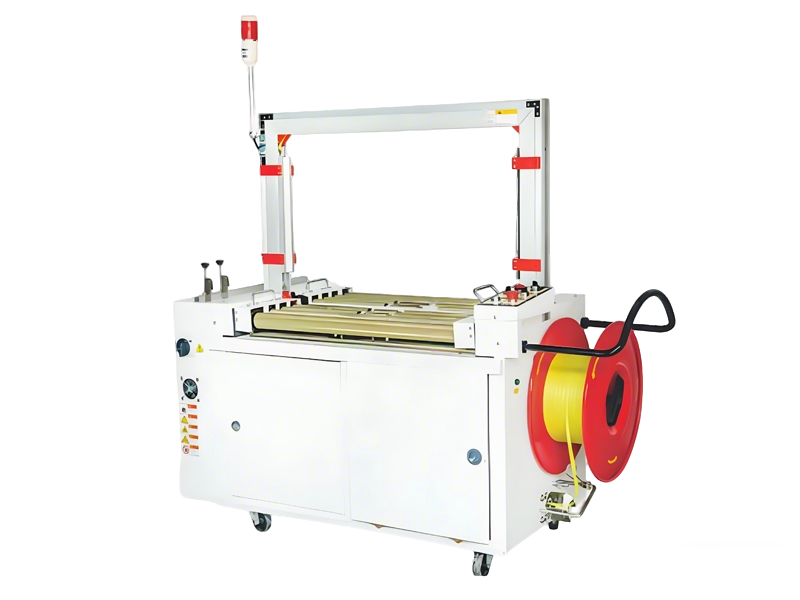
The Challenge of Dimensional Diversity in Modern Fulfillment
The statistics from the packaging industry paint a clear picture of the pressures facing logistics operations. According to market analysis, the global strapping machine market is projected to grow from $3.7 billion in 2025 to $6.1 billion by 2032, driven largely by e-commerce expansion . This growth isn't just about volume; it's about complexity.
When an e-commerce order drops into a pick-and-pack station, the resulting carton could be anything from a small poly bag containing a single book to a large, irregular box holding a set of kitchen gadgets. These cartons vary not only in footprint but also in compressibility and structural integrity. A strapping machine designed for uniform industrial loads will struggle in this environment. If the arch is too small, tall boxes jam. If the strap tension is set too high, fragile cartons collapse. If the cycle speed is fixed, the entire line bottlenecks.
The challenge, therefore, is to engineer a carton strapping machine that treats every carton as an individual event. This requires a shift from mechanical rigidity to data-driven flexibility. It requires a machine that can see the box, measure the box, and react to the box in milliseconds. This is where the integration of sensors and intelligent controls becomes non-negotiable.
Automatic Arch Adjustment: The First Line of Defense
The most visible adaptation in a modern strapping machine is the ability to physically adjust to the carton's dimensions. Fixed-arch machines are economical for consistent product runs, but they are ill-suited for fragmented SKUs. If the arch is too large for a small carton, the strap feeds wastefully and may misalign. If it is too small, the carton simply won't fit.
To solve this, manufacturers have developed end of line strapping machine models with motorized arch adjustments. These systems use photoelectric sensors or light barriers to scan the incoming carton's height and width as it approaches the strapping station . This data is fed to the machine's PLC, which instantly adjusts the arch aperture to match the package profile.
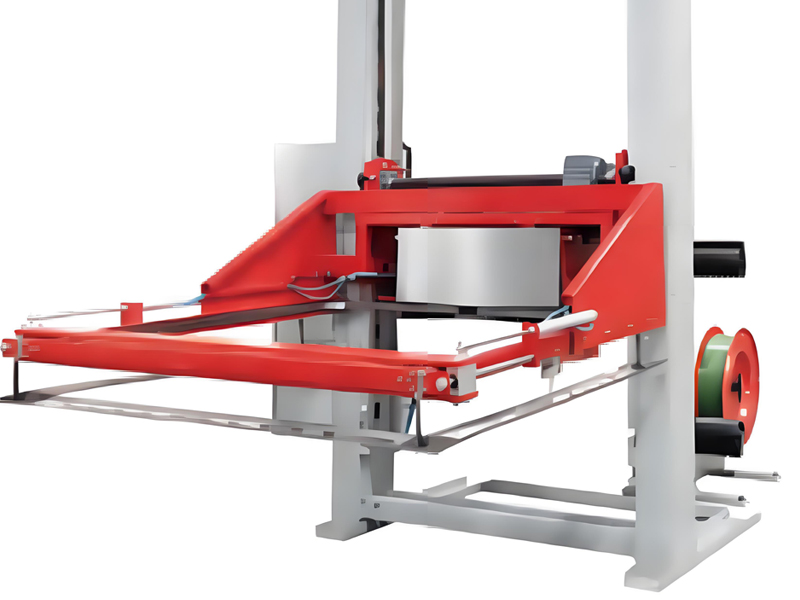
For instance, a high-end automatic strapping machine might feature an infinitely variable rotating control panel and programmable settings that allow the belt tension and arch position to be adjusted via the control interface based on package height queries . This means a conveyor line can handle a stream of mixed carton sizes without a single manual intervention. The machine physically "makes room" for each box, ensuring the strap path is optimized for every cycle, reducing waste and preventing jams.
Intelligent Tension Control: Protecting the Product
Adapting to carton size is not just about physical clearance; it is about respecting the carton's structural limits. A large, heavy box filled with books requires high strap tension to secure the load. A lightweight carton containing a single, fragile item requires a delicate touch. Applying the wrong tension can result in crushed goods, leading to costly returns and damaged brand reputation.
The financial impact of returns is staggering. Industry data suggests that the cost of returning a $50 product is approximately $33, and damaged goods are a leading cause of consumer returns . For high-value items, this cost is exponentially higher. An advanced strapping machine mitigates this risk through "soft strapping" technology.
Features like selectable soft strapping allow the machine to ramp up tension gradually or limit the maximum force applied to the package . The machine's control panel allows operators—or automated systems—to program specific band voltage values or tension profiles for different carton types . When integrated with a barcode scanner, the strapping machine can read the SKU, look up its required tension settings in a database, and apply the perfect amount of force every time. This level of precision turns the strapping process from a potential hazard into a quality assurance step.
Seamless Integration with Automated Packaging Lines
A strapping machine does not operate in a vacuum. To truly handle fragmented e-commerce orders, it must function as a seamless component of a larger automated packaging line solutions ecosystem. This means talking to the conveyors, the case erectors, and the sortation systems.
The integration capabilities of modern equipment are defined by their connectivity. Today's machines are equipped with potential-free contacts and 16-pin signal sockets that allow for real-time signal exchange with upstream and downstream equipment . If a carton is skewed on the conveyor, a light barrier can send a stop signal to the strapping machine to prevent a mis-strap. If the machine is out of strap, it can alert the line controller to divert traffic.
Furthermore, the latest generation of equipment, such as the SoniXs P7-Connect, embraces the Industrial Internet of Things (IoT). These machines are network-compatible, enabling data transmission directly to the cloud . This data can be integrated into ERP systems, providing managers with real-time visibility into line performance, strap consumption, and predictive maintenance needs. This digital integration ensures that the automatic strapping machine is not just a tool, but a intelligent node within the logistics network, capable of adapting to line speeds and order mixes without human oversight.
The Role of the Automatic Cartoning Machine Upstream
To fully appreciate the strapping machine's role, one must look at the packaging process holistically. The variability challenge often begins before the carton reaches the strapper. This is where the automatic cartoning machine plays a critical role.
An automatic cartoning machine is responsible for erecting the carton, loading the product, and closing the flaps. In an e-commerce environment, these machines must be incredibly flexible. They handle different blank sizes and product configurations, forming the carton that the strapping machine will later secure.
The synergy between the automatic cartoning machine and the strapping machine is vital for size adaptation. If the cartoner produces a box with inconsistent flap closure or slight dimensional variations, the strapper must be robust enough to handle that variance. Conversely, a smart system allows the cartoner to communicate the dimensions of the carton it just created directly to the strapper, allowing the strapping cycle to be pre-configured before the box even arrives. This level of machine-to-machine communication is the hallmark of world-class automated packaging line solutions, ensuring that fragmentation upstream does not lead to failure downstream.
Mechanical Design for Rapid Reconfiguration
While automation handles milliseconds-level adjustments, the physical design of the equipment must support rapid changeovers for longer-term shifts in the product mix. E-commerce trends change seasonally; a facility handling mostly small electronics in November might shift to large, lightweight holiday gifts in December.
A future-proof strapping machine incorporates design elements that facilitate quick reconfiguration. Tool-free disassembly of belt path components, as seen in many Mosca models, allows maintenance teams to clear jams or switch strap types in seconds . Hinged transport systems and easily accessible sealing units mean that when a physical adjustment is required, it doesn't require hours of downtime .
Additionally, mobility features such as lockable castors allow facilities to reconfigure their floor layout quickly . If a particular packing station needs strapping capacity, the unit can be moved, locked into place, and integrated into the conveyor line without a dedicated rigging crew. This mechanical flexibility ensures that the capital equipment can adapt to the facility's evolving needs, rather than the other way around.
Material Versatility: PP and PET Compatibility
Adaptation isn't limited to the machine's mechanics; it also extends to the materials it consumes. Different carton sizes and weights require different strapping characteristics. Polypropylene (PP) strap is cost-effective and ideal for lighter applications, while Polyester (PET) strap offers higher strength and retention for heavier or palletized loads, often serving as a safer, more flexible alternative to steel .
A versatile strapping machine must handle both. The ability to switch between PP and PET strapping materials allows a facility to use the optimal strap for each order type without investing in multiple, dedicated machines . Advanced machines automatically adjust the sealing parameters—whether heat-sealing for PP or friction-welding for PET—based on the material loaded.
This material flexibility also ties into sustainability goals, which are increasingly important in consumer-facing e-commerce. Using 100% recyclable PET strapping, for instance, can cut packaging waste significantly . An automatic strapping machine that efficiently uses these materials helps companies meet regulatory standards and consumer expectations for eco-friendly packaging .
Building a Resilient E-Commerce Operation
The question of how a strapping machine adapts to various carton sizes in the face of fragmented e-commerce orders is ultimately a question about resilience. The answer lies in a multi-layered strategy combining smart sensors, dynamic tension controls, robust integration capabilities, and flexible mechanical design.
Today's leading automatic strapping machine models are no longer single-purpose tools. They are intelligent peripherals capable of real-time adjustment, protecting goods from damage while maximizing line throughput. When integrated with an automatic cartoning machine and other components of automated packaging line solutions, they form a cohesive system that can absorb the shock of dimensional diversity without breaking stride.
For businesses looking to compete in the modern marketplace, investing in this level of adaptability is not optional—it is essential. By selecting strapping technology that sees, thinks, and adjusts, logistics operators can turn the challenge of fragmentation into a competitive advantage, ensuring that every carton, regardless of size, is secured perfectly and profitably.
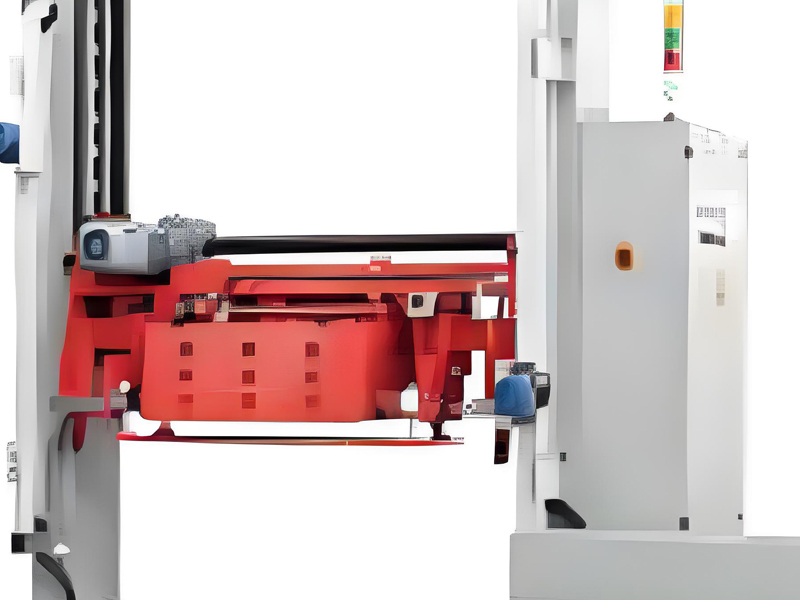
For businesses seeking to upgrade their end-of-line packaging, Wuxi Transfo Intelligent Packaging Co., Ltd. stands as a premier manufacturer and system integrator. Specializing in the engineering of high-performance automatic strapping machine systems, Transfo understands the complexities of modern e-commerce logistics. Their comprehensive portfolio includes fully integrated automatic cartoning machine solutions and complete automated packaging line solutions designed for maximum uptime and flexibility. Whether adapting to fragmented carton sizes or integrating with existing warehouse management systems, Transfo delivers robust, German-engineered technology tailored to the rigorous demands of the food, beverage, and logistics sectors, ensuring your packaging operation is built for the future.