

For decades, the heart of a pillow packaging machine has been that same reliable rhythm—film unwinding, product feeding, sealing, and cutting. But if you step onto a factory floor now, it feels different. The machines are quieter. Switching between product sizes takes minutes, not hours. And instead of turning handwheels, operators are just tapping on touchscreens.
This shift is not merely incremental. It represents a fundamental re-engineering of the pillow packaging machine, driven by the global integration of digital technologies. As we move further into 2026, the question is not whether these machines are becoming automated, but how deeply they are integrating with the broader nervous system of the smart factory. Wuxi Transfo Intelligent Packaging Co., Ltd. will explore with you the technical principles, economic benefits, and strategic advantages of modern intelligent pillow packaging machines, as well as how they interact with the complete end-of-line packaging ecosystem, including erector machines, Carton Packaging Machine, and Palletizing Robot.
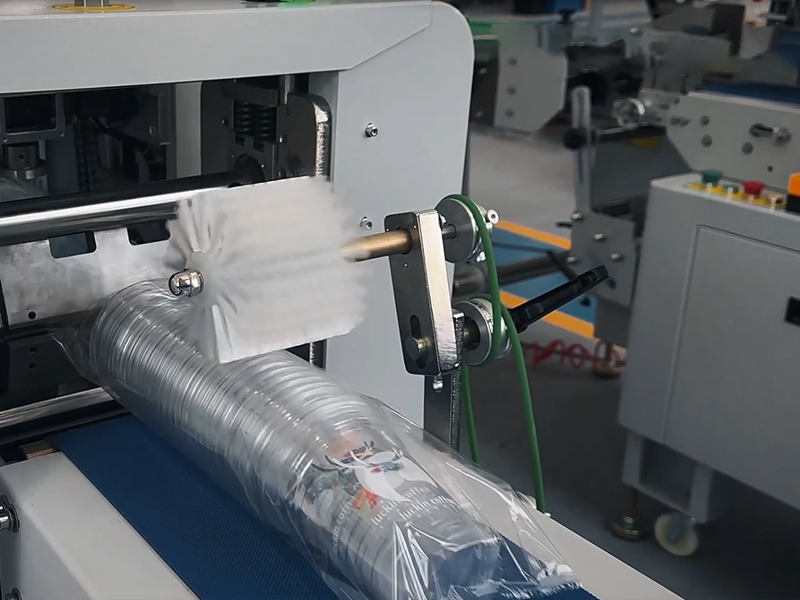
The Digital Heartbeat: Servo-Driven Intelligence
To understand the smart pillow packaging machine, one must first look under the hood. Traditional machines relied on a single motor connected by a labyrinth of chains, gears, and mechanical cams. This architecture worked, but it was rigid. Changing a bag size required physical labor and mechanical adjustments, and precision would drift over time as components wore out .
Today's high-speed flow wrappers have undergone a digital transplant. The modern pillow packaging machine utilizes a multi-servo system, typically a 3-axis configuration. In this setup, one servo motor controls the infeed conveyor, a second manages the film drive, and a third handles the end seal and cutter . These motors are synchronized via an "electronic cam"—a software algorithm that replaces physical gears.
This shift to full servo control is the foundation of smart functionality. Because the motors are independent yet digitally linked, the machine can make micro-adjustments in real-time. If the infeed detects a gap in product flow, the Horizontal Flow Wrapping Machinery instantly halts the film and cutter, preventing the waste of expensive packaging materials . This "No Product, No Bag" feature, simple in concept, is a direct result of deep tech integration and represents a significant leap in operational efficiency.
Seamless Integration with the End-of-Line Ecosystem
A smart pillow packaging machine does not exist in a vacuum. Its true value is unlocked when it communicates with the machines upstream and downstream. This is where the conversation expands to include the complete secondary packaging line.
Once products are wrapped in their primary pillow packs, they must be collated and prepared for transit. This process typically begins with an erector machine. Modern case erectors are no longer simple mechanical boxes; they are servo-controlled units that can adjust to different case sizes on the fly. When connected to the central line controller, the erector machine receives a signal from the pillow packaging machine about the product changeover and automatically adjusts its format parts, reducing setup time from minutes to seconds .
After the erector machine forms the carton, the grouped pillow packs are loaded. This leads to the next critical component: the carton sealing machine. Integrated sealers today do more than just apply tape or glue. Equipped with sensors and PLC controls, a modern carton sealing machine verifies that the case is full, checks for correct seal application, and logs the data for quality assurance. If the pillow packaging machine upstream experiences a jam, the intelligent carton sealing machine halts automatically, preventing a pile-up and reducing the need for manual intervention .
The final act in this automated symphony is handled by palletizing machines. As labor shortages intensify globally, the demand for flexible palletizing machines has skyrocketed. Exhibitors at recent trade shows have unveiled collaborative robotic palletizers and high-speed column-type units that integrate vision systems . These palletizing machines receive real-time data on the incoming load from the carton sealing machine. They can handle mixed-SKU pallets, adjusting stacking patterns automatically. The intelligence of the pillow packaging machine at the start of the line thus dictates the efficiency of the palletizing machines at the very end, creating a fully harmonized workflow.
The Economics of Efficiency: Data, Waste, and Uptime
For plant managers and financial officers, the push towards smarter pillow packaging machine technology is ultimately about the bottom line. The initial capital outlay for a fully servo-driven machine is higher than that of a mechanical counterpart, but the Total Cost of Ownership (TCO) tells a different story .
Consider film waste. A mechanical pillow packaging machine running at 200 packs per minute with a 1% empty feed rate can produce over a million empty bags annually. A smart machine with servo control eliminates this entirely . Furthermore, the precision of servo drives allows for tighter seal tolerances and the ability to work with thinner, more sustainable films, directly supporting corporate ESG goals .
Predictive maintenance is another frontier. With IoT integration, sensors on a pillow packaging machine monitor vibration, temperature, and torque. This data is analyzed to predict when a bearing might fail or a seal jaw needs replacement. Instead of scheduled downtime (which is often unnecessary) or unexpected breakdowns (which are catastrophic), maintenance becomes predictive. This logic extends to the erector machine, the carton sealing machine, and the palletizing machines; a fully connected line can schedule its own maintenance during off-hours, maximizing Overall Equipment Effectiveness (OEE) .
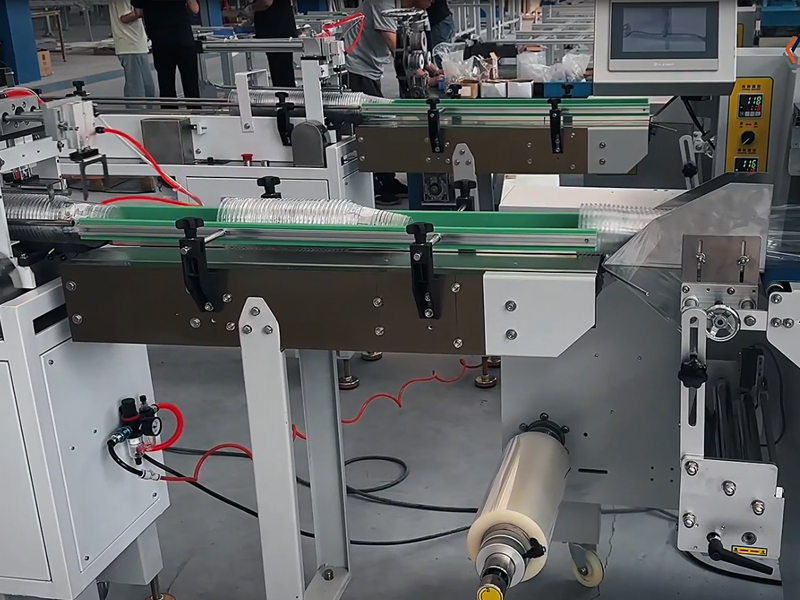
Adapting to Complexity: The Rise of the Generalist Machine
The market for the pillow packaging machine is projected to grow from $2.5 billion in 2024 to $4.8 billion by 2033, driven largely by the need for flexibility in the food, pharmaceutical, and consumer goods sectors . This growth is fueled by a significant trend: the demand for mass customization. Factories today must handle shorter production runs and more frequent changeovers.
Smart pillow packaging machines are rising to this challenge through "one-touch" recipe management. Operators simply select a product from the HMI, and the machine automatically adjusts bag length, sealing temperature, and conveyor speed . This capability transforms a packaging line from a bottleneck into a competitive advantage, allowing manufacturers to respond to market trends rapidly without massive retooling costs.
This flexibility is mirrored in the support equipment. A modern erector machine can switch from a small e-commerce box to a large retail display shipper in under five minutes. Palletizing machines equipped with 3D vision can now handle irregular mixed loads without needing pre-programmed patterns . The entire line, anchored by the intelligent pillow packaging machine, becomes a "generalist"—capable of handling a wide variety of tasks with minimal human intervention.
Looking Ahead: The Algorithmic Factory
As we look toward the remainder of the decade, the trajectory is clear. The pillow packaging machine is evolving into a data node within a vast industrial network. It is no longer judged solely on its mechanical speed, but on its intelligence, its ability to communicate with the erector machine, its compatibility with high-speed carton sealing machine technology, and its orchestration of complex stacking patterns with robotic palletizing machines.
The integration of AI for visual inspection is already beginning. Soon, a pillow packaging machine will not only seal a bag but will visually inspect the product inside for defects, rejecting faulty items before they are even wrapped . The factory of the future is algorithmic, and at every step of the packaging line—from the primary wrap to the final pallet—smart machines are making the decisions that drive profitability and resilience. For manufacturers, the path forward involves not just buying new equipment, but investing in a connected, intelligent ecosystem where the pillow packaging machine is the intelligent starting point.