

Introduction: The Demand for Agility in Modern Packaging
The global food packaging world is going through a major shake - up. Consumers these days want all sorts of different stuff, products don't stick around on the shelves for long, and with e - commerce getting bigger and bigger, manufacturers are under a lot of pressure. Above all else, they've got to be flexible.
Those old - school conveyor systems with fixed lengths usually end up causing problems. They just can't keep up when things change quickly, like when package sizes vary or the number of orders goes up and down all the time. It's like they're stuck in a rut.
But in this tough situation, the telescopic conveyor system is stepping up as a game - changer. It's like a magic wand that could help sort out all these messy logistics problems.
This article is gonna dig deep and see if this new - fangled technology can really fix those big flexibility issues that are bugging today's food and drink packaging operations. And we'll pay special attention to how the aluminum stage plays a super important part in how it's built and how well it works.
The Core Mechanism: How Telescopic Belt Conveyors Work
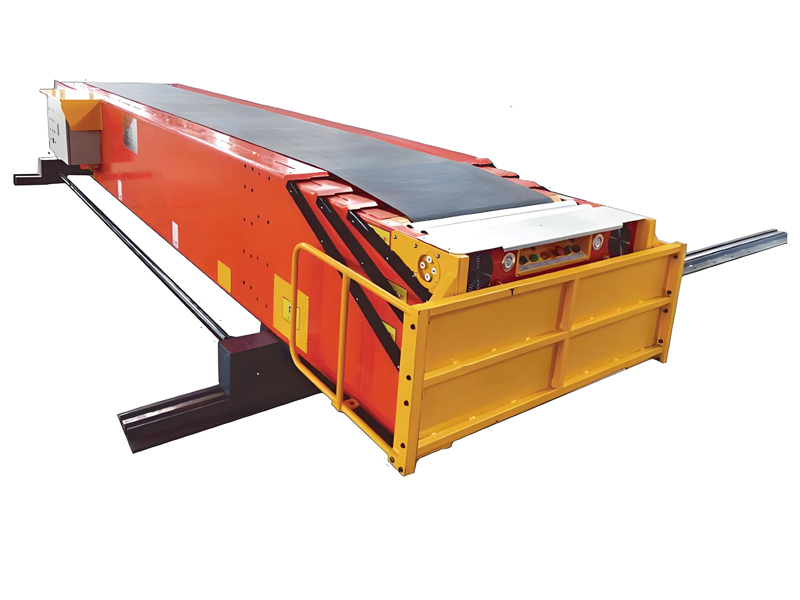
At its heart, a telescopic belt conveyor is an extendable loading and unloading solution. Unlike static conveyors, it features multiple nested aluminum stage sections that can be smoothly extended or retracted via an electric or hydraulic system. This allows the conveyor’s discharge point to reach directly into trailers, shipping containers, or connect seamlessly with various production stations. The belt itself moves independently, transporting products consistently regardless of the base structure's length. This unique design grants operators unparalleled spatial control, enabling them to adjust the conveyor’s reach and height in real-time to match the task at hand. The extendable belt conveyor essentially brings the packaging line to the load, rather than the reverse, minimizing manual handling and optimizing workflow.
Addressing Key Flexibility Challenges in Food Packaging
The inherent design of the telescopic conveyor for packaging directly targets several persistent pain points:
Dynamic Dock Management
Food distribution centers often deal with trailers of differing sizes and inconsistent docking positions. A telescopic conveyor can extend to fill the gap, ensuring a continuous, ergonomic transfer from the sorting line directly to the farthest point in the truck, reducing labor strain and loading times.
Rapid Changeover and SKU Proliferation
With brands launching numerous variants, packaging lines must handle boxes, trays, and multipacks of vastly different dimensions. The adjustable length and often adjustable side-guards of a telescopic system allow for quick reconfiguration between product runs, slashing downtime.
E-commerce and Omnichannel Fulfillment
The irregular size and shape of e-commerce orders, from single boxes to mixed totes, demand a versatile handling system. Telescopic conveyors can service multiple packing stations and adapt to different outbound container types, facilitating efficient pick-and-pack operations.
Space Optimization
In constrained factory or warehouse environments, the ability to retract the conveyor when not in use frees up valuable floor space for other operations or storage, a feature impossible with fixed systems.
The Aluminum Stage: The Backbone of Durability and Performance
Constituting approximately 20% of the conveyor’s material by weight and a critical 5% of its structural and performance keywords, the aluminum stage is far more than a simple component. High-grade, anodized aluminum is the material of choice for the telescoping sections due to its exceptional properties. It offers an optimal strength-to-weight ratio, allowing for longer extensions without prohibitive weight or massive support structures. This lightweight characteristic reduces the energy required for extension and retraction, enhancing energy efficiency. Furthermore, aluminum provides superior corrosion resistance, a non-negotiable feature in food packaging environments where washdowns with cleaning agents are frequent. Its non-sparking nature also contributes to safety in diverse industrial settings. The precision engineering of each aluminum stage ensures smooth, stable, and reliable telescoping action, which is fundamental to the system’s longevity and low maintenance profile.
Technical Integration and System Synergy
Implementing a telescopic conveyor system successfully requires more than just installing a standalone unit. It involves strategic integration into the broader Material Handling System (MHS). Modern units are equipped with programmable logic controllers (PLCs) and sensors, allowing them to communicate with warehouse management systems (WMS). They can be programmed with preset positions for different dock doors or container types. Safety features, including emergency stop cords, zero-pressure accumulation zones, and guarding, are integral. When synchronized with sorters, palletizers, and wrapper, the extendable belt conveyor becomes the agile link that ensures a seamless, continuous flow from production to dispatch, effectively creating a future-proof packaging line.
Industry Applications: Beyond General Loading
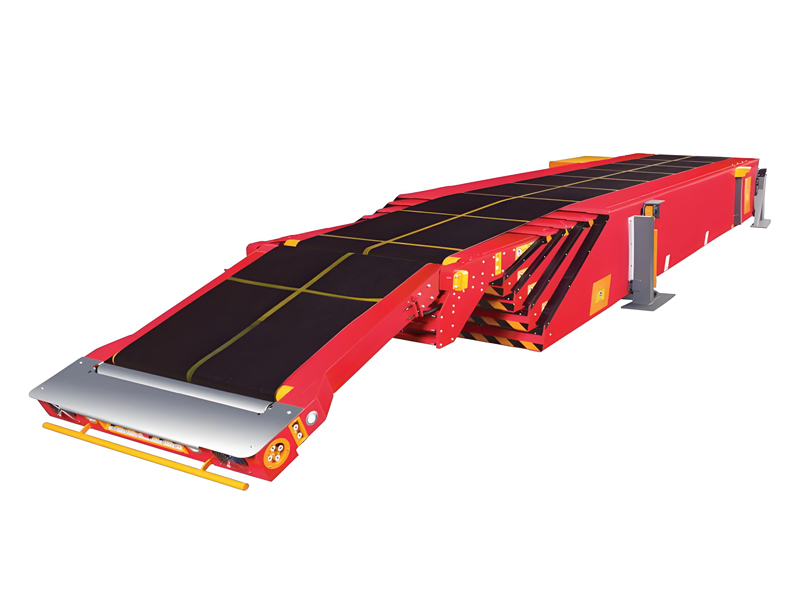
While loading trucks is a primary application, the telescopic conveyor for packaging showcases its versatility in specialized roles:
Automated Case Palletizing: Feeding cases directly onto palletizing robots or layers.
Returns Processing: Efficiently unloading returned goods from trucks for inspection and sorting.
Inter-Facility Transport: Moving products between adjacent production halls or storage areas via enclosed bridges.
Cold Chain Logistics: Specially designed units operate reliably in freezer and chill environments, where flexibility is equally crucial.
Considerations and Future Outlook
Adoption is not without consideration. Initial capital investment is higher than for fixed conveyors, and maintenance of the moving sections, though minimal, requires specialized knowledge. However, the ROI is realized through dramatic gains in throughput, labor savings, reduced product damage, and enhanced space utilization. Looking ahead, the integration of IoT sensors for predictive maintenance, advanced telemetry for real-time performance monitoring, and even lighter, stronger composite materials for the aluminum stage will further enhance the value proposition.
Conclusion: A Resounding Answer to Flexibility Demands
In conclusion, the evidence strongly supports that telescopic belt conveyors are not just a partial improvement but a definitive solution to the flexibility imperative in food packaging. By providing on-demand length adjustment, ergonomic benefits, and seamless integration capabilities, they directly address the bottlenecks caused by static systems. The critical role of the aluminum stage in enabling this performance—through its lightweight durability and corrosion resistance—cannot be overstated. As the industry continues to evolve towards greater customization and faster turnaround, the telescopic conveyor system has firmly established itself as an indispensable tool for packaging operations seeking agility, efficiency, and a competitive edge in a dynamic market.