

The logistics world is really struggling with a labor shortage like never before. You know what the U.S. Bureau of Labor Statistics says? In 2023, the warehouse and transportation sectors had over 500,000 job vacancies. That's a huge 60% jump compared to before the pandemic hit. And then there's the driver shortage—the American Trucking Associations reckon we're short by 80,000 drivers already, and that number could shoot up to 160,000 by 2030. Facing all these problems, automation's become our go-to fix. And guess what? Strapping machines, which we used to just see as basic packaging gear, are now leading the charge in this big change.
But can automated strapping systems truly alleviate labor shortages? This article explores how advancements in strapping technology, integrated with broader end of line packaging innovations, are reshaping logistics operations.
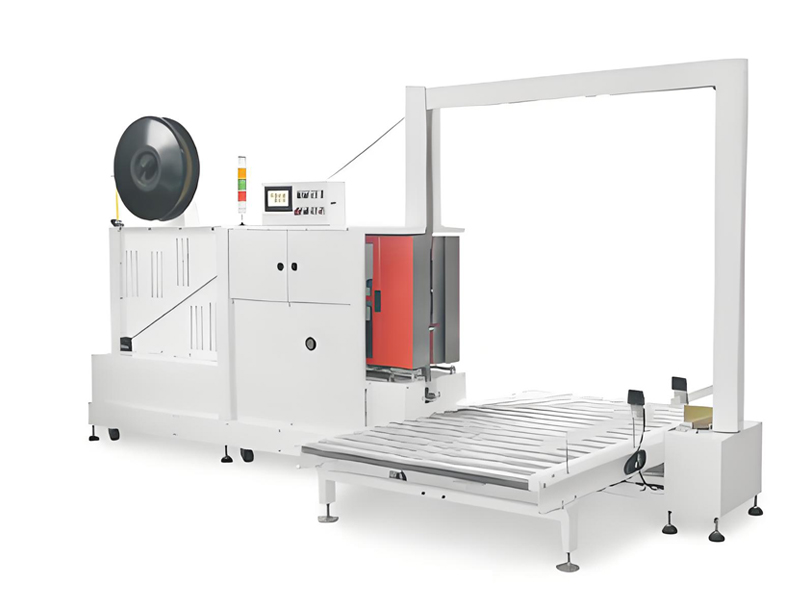
The Rising Demand for Strapping Machine Automation
Strapping machines secure goods with tensioned straps, ensuring stability during transit. Traditionally, these systems required manual operation—loading packages, adjusting tension, and cutting straps—which was both time-consuming and prone to human error. Today, however, automation is redefining their role.
Modern automatic strapping machines now feature AI-driven tension control, self-threading mechanisms, and real-time diagnostics. These systems reduce the need for skilled operators, enabling a single worker to oversee multiple machines simultaneously. For example, a mid-sized distribution center handling 20,000 parcels daily can cut labor costs by 30% by replacing manual strapping with automated alternatives.
The shift is driven by necessity. As e-commerce grows—projected to account for 22% of global retail sales by 2025—warehouses face mounting pressure to process orders faster. Manual strapping, which averages 8–12 seconds per package, becomes a bottleneck. Automated systems, by contrast, achieve speeds of 2–4 seconds per package, with some high-end models processing up to 60 straps per minute.
Integration with Post-Packaging Production Lines
Strapping machines rarely operate in isolation. They are part of a broader post-packaging production line that includes cartoning, labeling, and palletizing. Automation’s true value lies in its ability to synchronize these processes.
Consider a typical e-commerce fulfillment center: After products are packed into boxes by an automatic cartoning machine, they travel via a telescopic conveyor system to a strapping station. Here, sensors detect the box’s dimensions, adjusting strap placement and tension accordingly. The strapped package then moves to an automated palletizer, where robots stack and wrap it for shipping.
This seamless integration minimizes human intervention. A 2023 study by MHI, a logistics trade group, found that facilities using fully automated post-packaging lines reported 45% fewer errors and 25% higher throughput compared to manual operations. The key is interoperability—strapping machines must communicate with upstream and downstream equipment via IoT protocols like OPC UA or MQTT.
Overcoming Labor Challenges with Smart Technology
Labor shortages aren’t just about quantity; they’re about skill gaps. Recruiting workers proficient in manual strapping is relatively straightforward, but finding technicians who can maintain automated systems is harder. Manufacturers are addressing this through intuitive interfaces and self-diagnostic tools.
For instance, Signode’s latest strapping machine uses a touchscreen HMI (Human-Machine Interface) with visual prompts, reducing training time from days to hours. If a strap breaks or tension fails, the system sends an alert to a supervisor’s tablet, complete with troubleshooting steps. This “self-healing” capability cuts downtime by 50%, a critical advantage during peak seasons.
Another innovation is collaborative robots (cobots). These machines work alongside humans to handle irregularly shaped packages that automated strappers struggle with. A cobot might reposition a box for optimal strapping, while the machine handles the tensioning and cutting. This hybrid approach bridges the gap between full automation and manual labor, offering flexibility in dynamic environments.
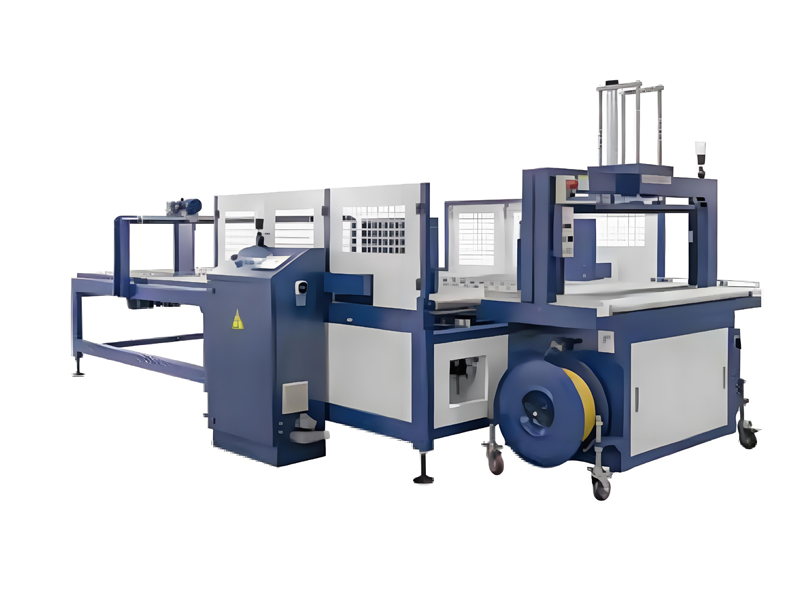
Case Study: How DHL Reduced Labor Costs by 40%
Global logistics giant DHL provides a compelling example. In 2022, the company automated strapping operations at its Columbus, Ohio, hub using Mosca’s RO-M-HS strapping machines. These systems were integrated with a telescopic conveyor system to feed packages from cartoning stations to strapping zones.
The results were striking:
Labor reduction
A team of 12 manual strappers was replaced by 3 technicians overseeing 8 automated machines.
Speed
Throughput increased from 1,200 to 2,000 packages per hour.
Accuracy
Damage rates dropped from 3% to 0.5% due to consistent strap tension.
DHL also adopted predictive maintenance, using sensors to monitor wear on strapping heads and replace parts before failures occurred. This proactive approach extended equipment lifespan by 20% and reduced unplanned downtime by 70%.
The Role of Telescopic Conveyor Systems in Efficiency
No discussion of strapping automation is complete without mentioning telescopic conveyor systems. These adjustable platforms extend into trucks, enabling direct loading from the production line. When paired with automated strappers, they eliminate the need for forklifts or manual pallet handling, further reducing labor needs.
For example, a telescopic conveyor can feed packages from a strapping machine into a trailer at a rate of 100 feet per minute. This continuous flow minimizes idle time between strapping and loading, a common inefficiency in manual operations. Some systems even incorporate weight scales and dimensioning scanners, ensuring compliance with shipping regulations without human oversight.
Challenges and Considerations
Despite their promise, automated strapping systems aren’t without hurdles. Initial costs can exceed $50,000 per machine, though ROI typically materializes within 2–3 years through labor savings. Space constraints are another issue; older warehouses may require retrofitting to accommodate conveyor systems and robotic arms.
There’s also the risk of over-automation. Facilities that replace all manual processes with machines may struggle to handle exceptions, such as oversized or fragile items. A balanced approach—using automation for high-volume, standardized tasks while reserving manual labor for complex cases—is often the most pragmatic solution.
The Future of Strapping: AI and Sustainability
Looking ahead, AI and machine learning will redefine strapping automation. Future systems may analyze historical data to predict optimal strap tension for different products, reducing material waste. Some manufacturers are already experimenting with biodegradable straps, aligning with sustainability goals.
The rise of “dark warehouses”—fully automated facilities operating without human presence—will also drive innovation. In such environments, strapping machines must collaborate with autonomous mobile robots (AMRs) to navigate aisles and load trucks. This level of integration requires advancements in robotics and computer vision, but the payoff could be a near-elimination of labor-related disruptions.
Conclusion: A Partial but Powerful Solution
Can strapping machine automation solve logistics labor shortages? Not entirely, but it’s a critical piece of the puzzle. By integrating with automatic cartoning machines, telescopic conveyor systems, and broader post-packaging production lines, automated strappers enhance efficiency, reduce errors, and lower operational costs.
For warehouses grappling with staffing challenges, the message is clear: Invest in automation where it matters most. Start with high-volume processes like strapping, then expand to other areas as budgets allow. The result won’t just be a leaner workforce—it’ll be a more resilient, future-proof operation ready to meet the demands of e-commerce and global trade.
As the logistics industry continues to evolve, one thing is certain: The strapping machine is no longer just a tool. It’s a gateway to the automated future.