

For decades, palletizing robot have been associated with bulky cartons, heavy loads, and high-throughput beverage or automotive lines. But the electronics and 3C industry tells a different story. Here, products are small, sensitive, and often worth more per kilogram than gold. The question is no longer whether palletizing machines can lift heavy objects, but whether they can handle light loads with microscopic precision.
This article examines the evolving role of palletizing robot in electronics manufacturing, focusing on three interconnected technologies: industrial palletizing robot, the robotic stretch wrapper, and end of line packaging. We will explore why traditional palletizing logic fails, and how a new generation of palletizing machines is rising to meet the challenge.
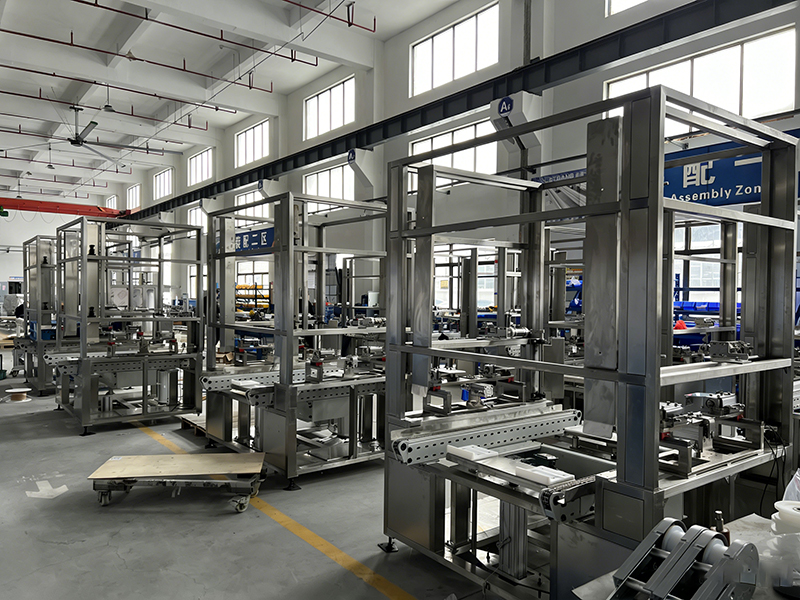
The Light-Load Paradox: Why Electronics Needs a Different Kind of Palletizing Machine
Most industrial palletizing machines are built for force. They manage 25‑kg flour bags, 30‑kg beverage trays, or 50‑kg auto parts. But an average smartphone weighs less than 250 grams. A printed circuit board assembly (PCBA) can be as light as 50 grams. When we speak of palletizing machines for electronics, we are talking about systems that must handle dozens of small, irregularly shaped items per minute without scratching, dropping, or misaligning them.
Moreover, electronics products come in mixed cases: one layer may contain USB chargers, another earphones, another smartwatches. Traditional palletizing machines that rely on uniform case sizes struggle here. The industry requires palletizing machines capable of mixed-case, light-load palletizing with real‑time adjustments. Without this capability, manufacturers resort to manual palletizing—slow, costly, and inconsistent.
Leading electronics contract manufacturers (Foxconn, Flex, Jabil) have reported that manual palletizing accounts for up to 15% of packaging line injuries and 7% of product damage. This has triggered a search for palletizing machines that combine robotic delicacy with industrial speed. The solution is not a single machine but an integrated system.
High-Speed Palletizer: Rethinking Speed for Small Formats
When engineers hear “high-speed palletizer,” they imagine 200 cases per minute from a beverage line. Electronics requires a different definition: high cycle rates for small, lightweight cases, often less than 5 kg each. A conventional high‑speed palletizer using a gantry or delta robot can achieve 120–150 picks per minute, but only if the pick-and-place action is optimized for light loads.
Newer palletizing machines designed for electronics use adaptive grippers with vacuum and soft-touch materials. These high-speed palletizer units can handle trays of chips or assembled phones without leaving micro‑scratches. For example, a delta‑robot high‑speed palletizer can depalletize empty trays, place finished products into trays, and then repalletize full trays—all within 8 seconds per cycle.
However, speed alone is insufficient. Electronics palletizing requires palletizing machines that integrate vision systems to identify orientation, barcodes, and potential defects. A high-speed palletizer without vision would place components incorrectly, leading to damaged pins or misaligned connectors. Therefore, modern high‑speed palletizers in 3C lines are essentially vision‑guided robots with palletizing logic embedded.
One critical parameter is acceleration control. A high-speed palletizer moving a 200‑gram phone at 4G acceleration generates a force equivalent to 800 grams—enough to dislodge small surface‑mount components. Hence, advanced palletizing machines use motion profiles that limit jerk (rate of acceleration change) to under 20 m/s³, preserving product integrity while maintaining throughput.
Robotic Stretch Wrapper: Beyond Film Tension
Stretch wrapping is typically associated with heavy pallets. For electronics, a robotic stretch wrapper serves a different purpose: securing light, compressible loads without crushing inner packages. Traditional turntable wrappers apply constant film tension, which can collapse small cartons or deform thin plastic trays.
A robotic stretch wrapper, by contrast, uses a robotic arm to navigate film around irregularly shaped loads. When integrated with palletizing machines, the robotic stretch wrapper can adjust film tension layer by layer. For example, the bottom layer of a pallet holding smartphone boxes might require higher tension for stability, while the top layer needs minimal tension to avoid crushing the topmost boxes.
Moreover, electronics pallets often include anti-static requirements. Standard stretch film generates static charges that can damage sensitive components. A modern robotic stretch wrapper for electronics uses conductive or anti‑static film, and the wrapping process is programmed to avoid generating triboelectric charges. Some palletizing machines now communicate directly with the robotic stretch wrapper to share load geometry data, enabling the wrapper to plan an optimal film path that avoids product edges.
The economic case is clear. Using a robotic stretch wrapper reduces film consumption by 25–30% compared to fixed‑wrappers, because the robot applies film only where needed. For a mid‑size electronics factory shipping 500 pallets per day, this saves over $40,000 annually in film costs alone. More importantly, it reduces damage‑related returns, which in the 3C industry can exceed $200 per returned unit.
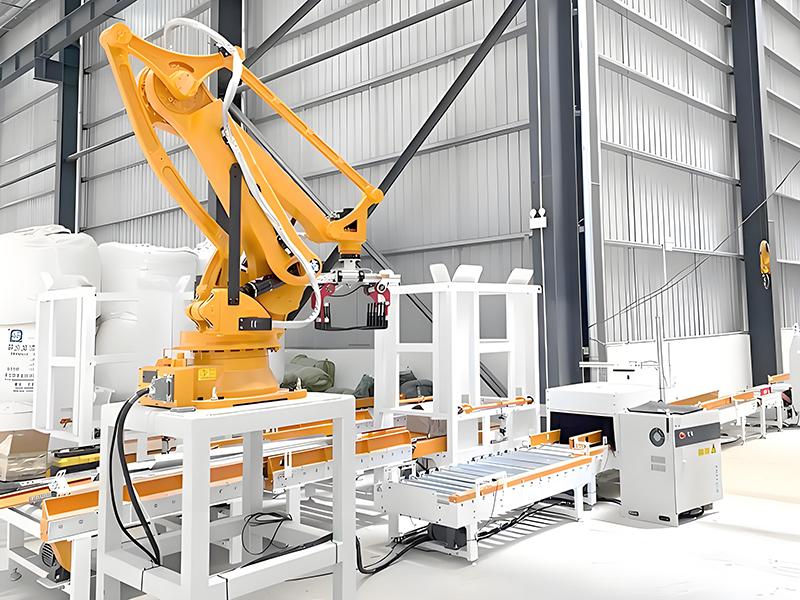
Automated Packaging Line Solutions: Where Integration Defines Success
Neither a high-speed palletizer nor a robotic stretch wrapper operates in isolation. The true value emerges from automated packaging line solutions that integrate case packing, labeling, inspection, palletizing, and wrapping into a seamless flow. For electronics, these automated packaging line solutions must handle product variety, small batch sizes, and frequent changeovers.
Consider a typical day at a wearable device factory. Morning production: smartwatch bands in flexible pouches. Afternoon: charging cases in rigid boxes. Evening: spare straps in polybags. Each format requires different end‑of‑line handling. Palletizing machines that are part of comprehensive automated packaging line solutions use tool‑less changeover and recipe management. An operator selects “product B” on a touchscreen, and within 90 seconds, the gripper, conveyor guides, and palletizing pattern automatically reconfigure.
Leading suppliers now offer automated packaging line solutions specifically for light-load electronics. These systems combine:
- A high-speed palletizer for tray and small‑case handling.
- A robotic stretch wrapper with anti‑static and tension‑control capabilities.
- Conveyor‑based buffering to decouple upstream packing from downstream palletizing.
- Vision verification of layer patterns before wrapping.
Data from a 2025 implementation at a Chinese 3C OEM shows that such automated packaging line solutions reduced manual intervention by 92%, increased palletizing accuracy (correct layer patterns) from 96.2% to 99.97%, and cut changeover time from 22 minutes to under 3 minutes. The palletizing machines within that line achieved a mean time between failures (MTBF) exceeding 8,000 hours, comparable to heavy‑duty industrial robots.
Key Challenges and Engineering Solutions
Despite progress, deploying palletizing machines for electronics light‑load palletizing faces four main hurdles:
Gripper design – Light loads shift easily. Suction cups can lose vacuum on perforated boxes. Soft foam grippers wear quickly. Solution: hybrid vacuum + mechanical pin grippers with wear sensors.
Layer pad management – Electronics pallets often need foam or cardboard layer pads. Palletizing machines must automatically place these pads every 2–5 layers. Failure causes crushing. Modern systems use dedicated pad feeders with double‑sheet detection.
ESD (electrostatic discharge) protection – Standard conveyor belts and grippers generate static. Palletizing machines for electronics require conductive belts, grounded grippers, and ionizing blowers at critical points.
Traceability – Each product case must be linked to a pallet position for recall purposes. Palletizing machines now integrate RFID readers or barcode scanners that log every placement. This data flows to the MES (manufacturing execution system).
Engineers have addressed these challenges through modular design. A single line of palletizing machines might use a common control platform but allow hot‑swappable grippers, conveyor sections, and wrapping modules. This flexibility is essential for 3C manufacturers who launch new products every six months.
The Future: AI and Predictive Palletizing
Looking ahead, palletizing machines for electronics will incorporate artificial intelligence for pattern optimization. Current systems follow predefined patterns, but AI can generate real‑time patterns based on incoming case sizes, weights, and fragility scores. This is particularly valuable for e‑commerce fulfillment of electronics accessories.
Additionally, predictive maintenance will become standard. Sensors on the high-speed palletizer’s gearboxes, the robotic stretch wrapper’s film carriage, and the conveyors will feed data to a cloud model that predicts failures before they occur. Early trials show a 40% reduction in unplanned downtime.
One emerging concept is the “palletizing machine as a data hub.” Instead of being a simple end‑of‑line device, palletizing machines will collect and analyze throughput, damage incidents, and machine health, then automatically adjust downstream logistics. For example, if the high-speed palletizer detects an increase in misplacements (indicating a gripper issue), it could signal upstream to slow case packing until maintenance is performed.
Conclusion
Can palletizing machines meet electronics’ precision light‑load palletizing needs? The evidence from leading 3C factories says yes—but not without significant evolution. Traditional heavy‑duty palletizing machines are unsuitable. Instead, the electronics industry requires a new breed of palletizing machines that integrate a high-speed palletizer with delicate handling, a robotic stretch wrapper with variable tension, and automated packaging line solutions that prioritize flexibility.
These systems are already operating in smartphone, wearable, and PCBA manufacturing lines, delivering damage rates below 0.1% and changeovers under five minutes. As consumer electronics continues to miniaturize and multiply in variety, the demand for specialized palletizing machines will only grow. The engineering challenge is no longer feasibility—it is cost‑effective scalability. And that challenge is being solved, one precision pallet at a time.