

As global sustainability mandates tighten and resin prices remain volatile, the beverage industry has committed irrevocably to lightweighting. From the 34g HDPE milk jugs of 1992 to today’s 26g variants, and from standard glass to thermally strengthened bottles weighing 30% less, the reduction of packaging material is a proven strategy for lowering carbon footprints and transport costs . However, this environmental victory has created a mechanical nightmare at the end of the filling line.
The very properties that make lightweight bottles sustainable—thin walls, flexible structures, and low rigidity—turn them into "problem children" for automated handling. These containers buckle under compression, shift unexpectedly during accumulation, and refuse to form stable layers. For plant managers, the question is no longer about the bottle itself but about the machinery that handles it.
Can the modern end of line packaging rise to meet this specific palletizing challenge? The answer lies not in a single machine, but in the integration of specialized conveyance, customized end-of-arm tooling, and intelligent layer programming. This article examines the engineering hurdles of lightweight bottles and how advanced complete end of line packaging system are rewriting the rules of load stability.
The Physics of Flimsy: Why Lightweight Bottles Disrupt Traditional Lines
To understand the solution, one must first respect the difficulty of the problem. Traditional palletizing relies on compression strength. Standard PET or HDPE containers could bear the weight of upper layers on their rigid shoulders or necks. However, lightweighting removes that excess plastic. The result is a bottle that exhibits "dynamic deformation."
In a high-speed post-packaging production line, these bottles face three primary failure modes. First is column buckling, where the vertical force applied by a layer pad or gripper head crushes the top-load zone of the bottle. Second is pneumatic instability; lightweight containers often have thinner base geometries, causing them to rock or spin under the air currents generated by high-speed conveyors. Third is thermal sensitivity; lightweight glass or thin PET retains heat differently, causing warping as they exit shrink tunnels .
The industry has learned that retrofitting old machinery rarely works. A dedicated approach requires rethinking the interface between the conveyor, the accumulation table, and the palletizing cell.
Redefining Material Flow: The Role of the Telescopic Belt Conveyor
Before a palletizer can stack a lightweight bottle, the line must deliver that bottle in a stable, high-density format. This is where logistics and production intersect. Often, the bottleneck occurs not at the palletizer itself, but at the infeed—specifically, the interface between the warehouse and the packaging hall.
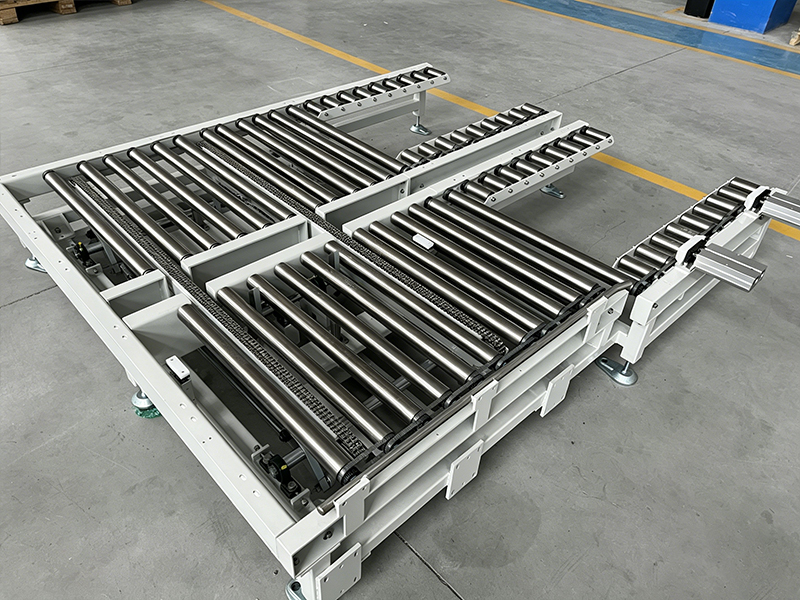
This is where the telescopic belt conveyor has emerged as a critical bridge component. In a facility handling lightweight bottles, the risk of jams increases exponentially with every transfer point. Traditional fixed conveyors create shear points where lightweight bottles can "shingle" or overlap. However, a telescopic belt conveyor offers a seamless, extendable path that maintains a consistent belt surface from the palletizing discharge to the truck loading bay .
For lightweight bottles, the advantage is the reduction of "dead plates"—the metal gaps between conveyors where bottles tip over. By extending the belt directly into the unloading zone, the telescopic belt conveyor ensures that the fragile, lightweight layer remains intact. Furthermore, modern units feature adjustable incline angles and variable speed drives that sync precisely with the palletizer’s output, preventing the back-pressure that crushes lightweight sidewalls .
The Core Solution: Automated Packaging Line for Unstable Loads
When addressing the specific issue of layer formation, standard gripping methods fail. A standard clamp or suction head applies uniform pressure. For lightweight bottles, uniform pressure means uniform collapse. Consequently, contemporary automated packaging line solutions for the beverage sector have moved toward "gentle handling" architectures.
These systems utilize three specific technologies. First, servo-driven layer pads with segmented compression plates allow the gripper to conform to the varying heights of lightweight containers, applying pressure only to the reinforced neck finish rather than the flexible body. Second, "captured head" palletizing uses side belts that support the entire layer circumference before the lifting plate drops away, preventing the lateral drift common with flimsy packaging. Third, low-pressure vacuum systems with flow control prevent the suction from deforming thin bottle walls .
Furthermore, integration with stretch wrappers has become tighter. Advanced automated packaging line solutions now share data between the palletizer and the wrapper. If the palletizer detects a slight lean in the lightweight layer, it signals the wrapper to apply a higher containment force at the base of the pallet to cinch the load tight before the lean propagates .
When Standard Isn't Enough: The Rise of the Customized Post-Packaging Line
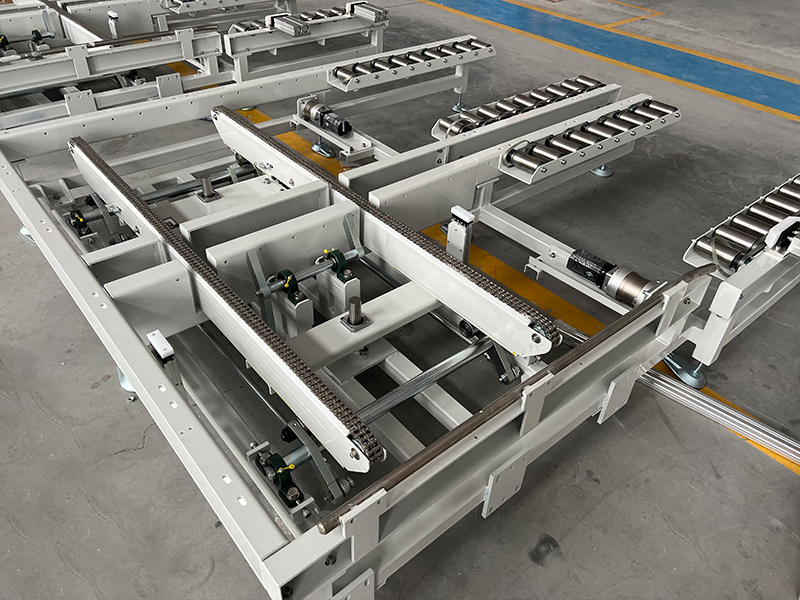
Despite advances in standard robotics, lightweight bottles often defy generic solutions. A bottle designed for a premium water brand has a different slipperiness factor than a household chemical bottle, even if they weigh the same. This variability necessitates a customized post-packaging line.
A customized post-packaging line begins with an audit of the "dynamic stability" of the specific lightweight bottle. Engineers use this data to tailor the lane dividers, the infeed screw pitch, and the layer pattern. For instance, a recent project for a 30% lighter glass wine bottle required a customized post-packaging line that featured neck gripping rather than body gripping. Because the glass was too thin for traditional pinchers, the line used a customized tool that inserted a mandrel into the bottle mouth to lift and place it .
Additionally, customization addresses the "slip sheet" problem. Lightweight bottles often require a textured layer pad to prevent shifting. A customized post-packaging line integrates an automatic layer pad dispenser that places a high-friction sheet between every tier of bottles. Without this customization, standard automated packaging line solutions would watch helplessly as the second layer slides off the first during acceleration.
Future-Proofing Through Data Integration
The lightweight bottle is here to stay, and the materials will only get thinner. To solve the palletizing challenge long-term, the post-packaging production line must become "intelligent." This means moving away from mechanical hard stops to sensor-driven soft handling.
Modern lines use 3D vision systems to map the actual shape of the top layer of lightweight bottles. Because these bottles deform slightly during filling or capping, their heights are never perfectly uniform. The vision system calculates the "high points" and "low points" and instructs the robotic arm to angle the layer pad slightly to compress the taller bottles more than the shorter ones, ensuring equal load distribution .
Furthermore, the line must communicate with the stretch wrapper to adjust film tension in real-time based on the bottle’s surface temperature. Warm lightweight bottles are more malleable; if the line detects a temperature variance, it can slow the palletizing cycle or adjust the containment force applied by the telescopic belt conveyor feeding the pallet area.
Conclusion
The lightweight bottle represents a paradox: it is ecologically vital but mechanically difficult. To treat it like a standard rigid container is to invite product damage, downtime, and returns. However, the answer is not to abandon lightweighting but to evolve the engineering of the post-packaging production line.
By integrating telescopic belt conveyor systems that ensure smooth infeed, deploying customized post-packaging line tooling that respects the bottle’s specific geometry, and adopting holistic automated packaging line solutions that link palletizing with wrapping, producers can achieve stability.
The industry is changing. Soon, the bottle itself won't be the focus—the smart handling system behind it will be the real star. If you're a plant manager dealing with tipping loads and crushed layers, here's the truth: your bottles aren't the issue. It's your old way of stacking them. A modern, customized post-packaging line isn't just a nice-to-have. It's the only way to go lightweight without falling apart—and actually make money doing it.