

Most companies pay to ship air. Standard box sizes force operators into a compromise: either a container that barely fits or one so oversized it requires pillows of plastic and paper to fill the voids. That excess volume translates directly into dimensional weight charges from carriers, wasted corrugate, and unnecessary carbon emissions.
Box-on-demand technology eliminates this compromise. These systems fabricate custom containers in real time, cut precisely to each order's dimensions. Logistics operators consistently report dimensional weight reductions exceeding 30 percent, complete elimination of void fill, and measurable improvements in truck utilization.
When properly integrated into the end of line packaging, these systems transform final-stage distribution. This article examines how box-on-demand achieves these savings, the engineering behind modern automatic cartoning machines, and the role of complementary equipment like the strapping machine in creating cohesive end-of-line solutions.
The Math Behind 30 Percent Reduction
Most fulfillment operations stock perhaps twenty standard box sizes. When an order arrives, pickers select the smallest box that physically fits the product, but the geometry rarely matches perfectly.
A product measuring 14x10x8 inches forces the operator into a 16x12x10 box. Those two-inch gaps on each dimension represent wasted volume requiring dunnage. Box-on-demand eliminates this mismatch. The system measures the product, calculates optimal box geometry, and fabricates a custom container sized precisely to 15x11x9 inches.
Carolina Biological Supply documented dimensional weight charge reductions exceeding 66 percent after implementing box-on-demand, with dunnage costs falling by 30 percent despite no increase in damage rates. Walmart's adoption of Packsize Ultra5 machines targets the waste generated by oversized boxes, calculating that right-sizing enables up to 33 percent more boxes per freight load.
The Post-Packaging Production Line
A box-on-demand case packer cannot operate in isolation. The machine produces custom containers at speeds reaching 600 boxes per hour, but those boxes must travel through subsequent operations before shipment. This is where the post-packaging production line becomes critical.
The end of line packaging encompasses all activities after primary packaging but before products leave the facility. Modern automated systems transform this sequence into continuous, integrated flow. The box-on-demand carton packer fabricates containers feeding directly into conveyors. From there, products proceed through automatic cartoning machine operations, labeling stations, sealing equipment, and finally to sortation and palletizing.
When properly designed, the end of line packaging eliminates bottlenecks. The carton packer produces at line speed, conveyors transport without manual handling, automatic cartoning machines insert products with precision, and strapping machines secure loads for shipment.
Engineering Behind Carton Packaging Machine
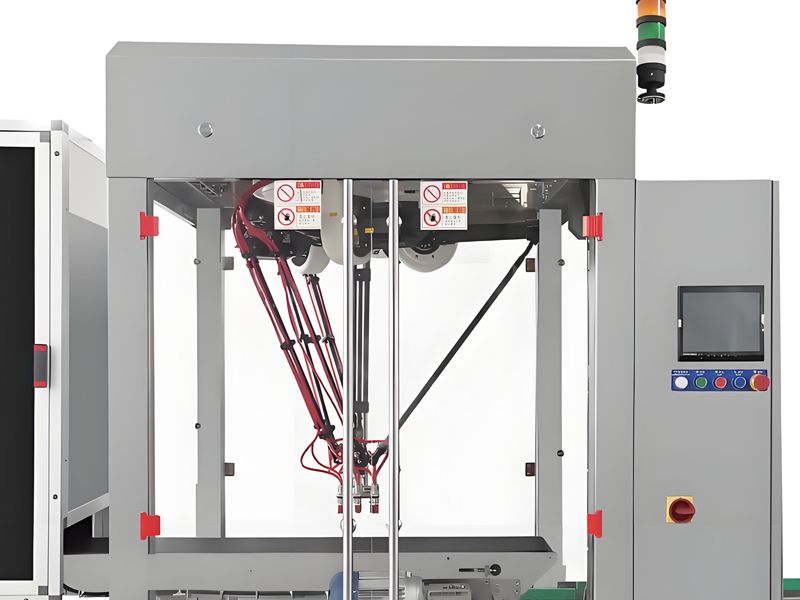
Box-on-demand represents a specialized subset of the broader automatic cartoning machine category. Traditional machines divide into continuous mode for highest speeds exceeding 400 cartons per minute, and intermittent mode for fragile or irregular products.
Box-on-demand systems differ fundamentally: they fabricate the container rather than erecting pre-manufactured blanks. The machine receives continuous corrugated feed, cuts and scores material to exact specifications, and discharges a flat carton ready for assembly. This process takes approximately ten seconds per box, producing up to 600 units hourly.
The engineering challenges are substantial. The machine must accommodate varying material thicknesses, maintain precision across thousands of cycles, and integrate seamlessly with upstream measurement and downstream assembly. Modern solutions employ servo-driven mechanisms, digital presets, and user interfaces storing configurations for rapid changeovers.
CMC Packaging Automation's Super Vertical produces both right-sized paper bags and corrugated boxes, occupies under ten square meters, achieves 500 packages per hour, and consumes 47 percent less energy than traditional systems.
Integration Points
The effectiveness of any automatic carton packing machine depends on integration with surrounding equipment. Box-on-demand connects to upstream fulfillment systems, downstream sealing and labeling stations, and ultimately to shipping systems.
Upstream integration begins with order data and product measurement. Advanced systems use machine learning to analyze dimensions and determine optimal box configurations. The measurement process uses laser scanning or camera-based dimensioning to capture geometry.
Downstream integration involves the post-packaging production line equipment completing the shipment. After box fabrication and product insertion, packages move to sealing. Heavier shipments often pass through a strapping machine. Mosca's SoniXs P7-Connect exemplifies modern strapping machines designed for fully automated lines, with network compatibility enabling data transmission to cloud systems.
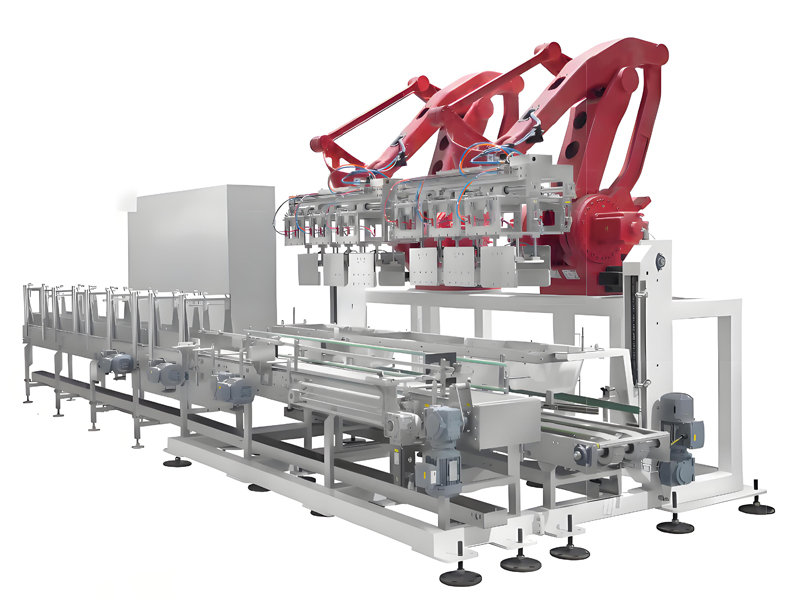
Packages then proceed to sortation and palletizing. Automated palletizing systems receive packages directly from conveyors, building stable loads without manual intervention.
Industry Applications
Box-on-demand carton packers have demonstrated value across diverse industries.
In e-commerce fulfillment, Amazon's automated packaging machines across European facilities produce custom-fit boxes and paper bags on demand, eliminating excess materials while improving vehicle utilization. Labels up to 75 percent smaller than standard further reduce consumption.
Medical supply packaging demands sterility and traceability. Automatic cartoning machines serving this sector maintain clean environments while integrating with labeling systems tracking expiration dates and lot numbers. Custom-sized cartons reduce storage requirements for pre-made boxes.
Automotive parts distribution combines heavy items with irregular shapes. Brake rotors and suspension components resist categorization into standard box sizes. Box-on-demand fabricates containers to exact dimensions, eliminating void fill. Heavier weights favor strapping machine integration over tape alone.
Food service operations face high volumes with consistent products but variable order quantities. Automatic cartoning machines emphasize speed and consistency, producing sealed cartons while reducing labor requirements.
Economics of Implementation
The 30 percent waste reduction translates directly to financial benefits justifying equipment investment.
Dimensional weight pricing forms the largest savings component. Every cubic inch of excess box size increases carrier charges. A 30 percent reduction on high-volume shipments recovers significant expenditure.
Corrugate consumption decreases proportionally with box size reduction. Less material per box means lower procurement costs and reduced inventory carrying charges. Eliminating pre-made box inventory frees warehouse space.
Dunnage elimination removes both procurement costs and environmental disposal expenses. Void fill materials including air pillows, paper fill, and foam peanuts carry ongoing operational expenditure.
Labor efficiency improvements compound material savings. Box-on-demand reduces physical effort, enabling more orders per shift. Walmart's Ultra5 installation enables packing and labeling for shipment in as little as 30 minutes.
CMC's Super Vertical demonstrates energy efficiency gains, consuming 47 percent less energy than traditional systems while producing 500 packages hourly.
Material Considerations
Box-on-demand carton packers accommodate various corrugated materials, enabling operators to balance protection with sustainability. Machines must handle varying thicknesses and stiffness levels while maintaining precise cut and score lines.
The sustainability benefits extend beyond reduced corrugate. When boxes fit properly, fewer trucks transport the same orders, reducing fuel consumption and emissions. CMC calculates that reduced parcel volume and improved truckload density cut CO2 emissions by up to 30 percent compared to traditional packaging.
European operators face pressure from the Packaging and Packaging Waste Regulation, imposing strict requirements on recyclability. Box-on-demand directly supports compliance by minimizing material usage and ensuring all corrugate is recyclable.
Amazon reduced average per-shipment packaging weight by 43 percent since 2015, representing over 3 million metric tons eliminated. These reductions demonstrate how packaging automation contributes to corporate sustainability targets.
Future Trajectories
Box-on-demand technology continues evolving with emerging capabilities further enhancing waste reduction and efficiency.
IoT integration transforms how packaging equipment communicates with facility systems. Mosca's SoniXs P7-Connect enables data transmission directly to cloud platforms, integrating with ERP for real-time visibility. This connectivity allows predictive maintenance and remote troubleshooting.
Machine learning algorithms improve continuously processing more order data. Amazon's automated packaging machines rely on learning systems optimizing box configurations based on historical performance, reducing material usage incrementally as patterns emerge.
CMC's forthcoming Genesys system, powered by Vary-Tote technology, enables direct pick-to-pack flows and fully automated order handling, pursuing the dark factory concept where automation handles all fulfillment without human intervention.
Integration between box-on-demand carton packers and other post-packaging production line equipment will deepen as machine-to-machine communication standards evolve, transforming discrete operations into continuous flows eliminating inefficiency.
Implementation Considerations
Operations managers must evaluate multiple factors beyond headline waste reduction figures.
Volume expectations determine appropriate equipment scale. Packsize Ultra5 produces 600 boxes hourly for high-volume fulfillment centers. CMC's Super Vertical offers 500 packages hourly with smaller footprint for space-constrained facilities.
Product variability influences box size range requirements. Facilities handling extreme dimensional variation need machines with broad adjustability and rapid changeover.
Integration with existing warehouse management systems requires careful planning. The carton packer must receive order data reliably and feed downstream equipment without creating bottlenecks.
The human element deserves attention despite automation's labor-reducing benefits. Operators must be trained to monitor performance, clear occasional jams, and perform maintenance. The transition from manual packaging to supervisory roles requires thoughtful change management.
Conclusion
The 30 percent waste reduction achievable through box-on-demand carton packers signals a fundamental shift in distribution. Companies move from standardized containers forcing compromise to custom solutions eliminating waste at its source.
This transformation extends across the entire post-packaging production line, where automatic cartoning machines, strapping machines, labeling systems, and palletizing equipment work in concert. Integration creates continuous flow reducing labor, eliminating errors, and accelerating delivery.
For logistics operators facing pressure to control costs, reduce environmental impact, and accelerate fulfillment, box-on-demand technology offers a proven path forward. The question is not whether this technology works, but how quickly operators implement it to capture the 30 percent waste reduction waiting in their facilities.