

In the high-stakes world of beverage production, where margins are often measured in cents per unit and consumer demand fluctuates with the seasons, the efficiency of the end of line packaging process is critical. For years, the bottleneck in many beverage plants has not been the filling line, but the secondary packaging—specifically, the forming, filling, and sealing of cartons for shipping.
As we move further into 2026, the conversation has shifted from simple automation to high-speed integration. The advent of advanced case sealer technology promises to revolutionize throughput. But the question remains: how much can a high-speed case sealer actually boost efficiency?
Based on current industry data and emerging technologies, the implementation of modern high-speed case sealer systems can increase overall line efficiency by 30% to 50% , while simultaneously reducing labor costs and material waste. This article breaks down the specific areas where these gains are realized, the technology driving them, and how they integrate with the broader ecosystem of palletizing robot and pallet wrapper systems.
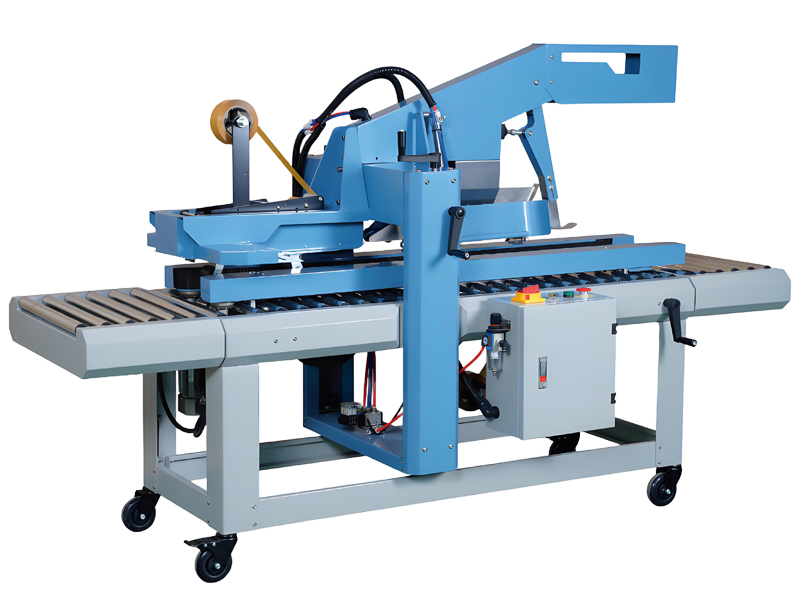
The Throughput Revolution: Numbers Don't Lie
To understand the impact of a high-speed carton sealing machine, one must first look at the raw output data. Traditional semi-automatic or entry-level automatic case sealers typically operate within a specific range. For example, a robust semi-automatic automatic case sealer like the BEL 180 might handle up to 10 cases per minute, which is suitable for low-volume production or facilities with fluctuating line speeds .
However, modern beverage lines operating in the 60,000 to 80,000 bottles-per-hour (BPH) range require a different caliber of machinery. Today's high-speed carton sealing machine options are closing the gap. Research into optimized folding systems has shown that automated retrofits can boost production from 19 cartons per minute to 30 cartons per minute—a 58% increase in pure output .
At the top end of the market, machines like the Syntegon Kliklok ACC (Advanced Carton Closer) are achieving outputs of up to 200 cartons per minute . When matched with high-volume beverage lines, this speed ensures that the carton sealing machine is no longer the slowest link in the chain. Instead, it acts as a high-speed conduit that matches the rhythm of the fillers and cappers upstream.
Engineering "Low-Glue" and High-Speed Stability
Speed alone is useless if it compromises seal integrity or wastes materials. One of the most significant efficiency boosts in recent carton sealing machine design comes from re-engineering the mechanical process to reduce adhesive consumption.
In high-speed environments, the pressure to keep up often leads to excessive glue usage to ensure a solid bond in a short amount of time. However, next-generation machines are solving this through mechanical design. For instance, the integration of extended compression sections in machines like the ZB70 allows the carton sealing machine to maintain higher speeds while actually reducing glue consumption by 25% to 35% under identical conditions .
This dual benefit—higher speed with lower consumable usage—directly impacts the bottom line. For a beverage plant sealing millions of cartons annually, a 30% reduction in adhesive cost translates to tens of thousands of dollars in savings, representing a pure efficiency gain that goes beyond simple labor reduction.
Compatibility and Changeover: The Hidden Efficiency Killer
Efficiency is not just about running fast; it is about running continuously. In the beverage industry, product mix is a major variable. A line might run 500ml water bottles in a 2x3 pack in the morning and switch to 1-liter sports drinks in a 2x4 pack in the afternoon. If a carton sealing machine requires 45 minutes of mechanical adjustment and trial runs to switch between these formats, the overall line efficiency plummets.
Modern high-speed carton sealing machine systems are addressing this with advanced compatibility features. The integration of servo-driven adjustments has been a game-changer. Where traditional machines might have one servo controlling an entire section, high-speed variants now feature up to ten individual servos for the compression section alone . This allows for "changeover on the fly" or tool-less changeovers that reduce downtime from hours to minutes.
Furthermore, advanced carton sealing machine designs now feature "pre-suction" blank separation systems. These allow the machine to handle imperfect materials—such as cardboard that is slightly warped or has mild adhesion due to humidity—without jamming . By reducing the number of jams caused by material variance, the machine boosts Overall Equipment Effectiveness (OEE) significantly.
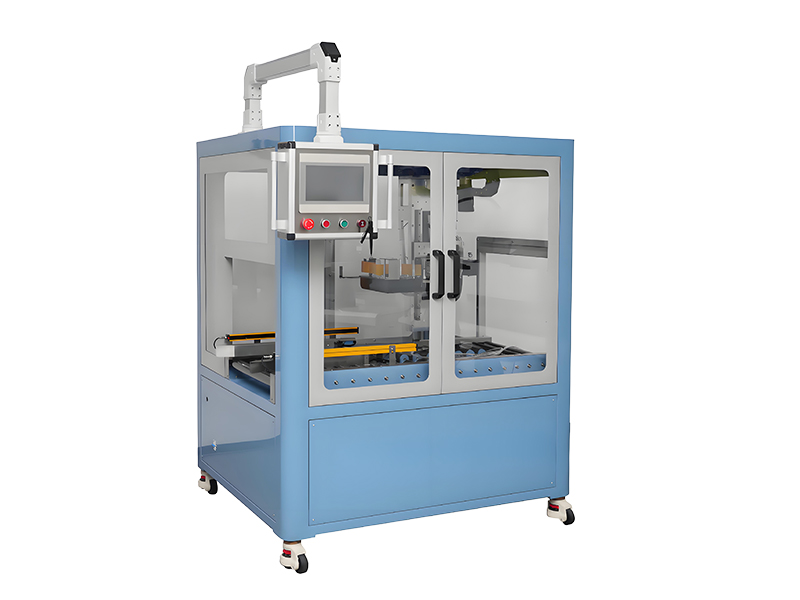
The Ecosystem: Feeding the Palletizing and Wrapping Stages
The true value of a high-speed carton sealing machine cannot be assessed in isolation. Its efficiency is intrinsically linked to the machinery that follows it: the palletizing machines and the wrapping machine.
If your carton sealing machine outputs 200 cartons per minute but your palletizing station can only stack 150 cartons per minute, the line is inefficient. This is why the latest generation of sealers is designed with "buffer logic." They create a consistent, metered flow of sealed cartons that feeds directly into high-speed robotic palletizing machines.
In the beverage warehousing sector, integrated systems like the "RAPTOR" dual-robot system are becoming standard. These systems rely on a consistent inflow from the sealing line to depalletize, buffer, and re-palletize mixed-SKU loads . A high-speed carton sealing machine ensures that these robotic palletizing machines never starve for product, maximizing their utilization rate.
Once palletized, the load moves to the wrapping machine. The efficiency of a wrapping machine is heavily dependent on the stability and uniformity of the pallet load. Cartons sealed with precision and stacked squarely by palletizing machines create a geometrically perfect load. This allows a modern wrapping machine, such as a high-speed rotary arm stretch wrapper, to apply film with optimal tension and fewer revolutions. Advanced wrapping machine systems using "pallet grip" technology can then secure these loads without the risk of film breakage caused by shifting cartons .
Robotics and the "Lights-Out" Factory
The push toward Industry 4.0 and the "lights-out" factory—a facility that can run unattended—is driving the latest innovations in the carton sealing machine sector. The integration of collaborative robots (cobots) directly into the sealing process is blurring the lines between machine types.
For example, robotic systems like the Fairino FR 5 are being deployed to handle the delicate act of folding and sealing cartons for high-value spirits or bottled drinks . These systems use smart sensors to adapt to minute variations in carton quality, ensuring consistent quality without human intervention.
This robotic integration means that the carton sealing machine is no longer a passive piece of metal, but an active data node. It can predict maintenance needs, alert operators to material inconsistencies, and communicate with upstream fillers to slow down or speed up based on real-time demand. This level of integration provides the ultimate efficiency boost: the elimination of unplanned downtime.
Conclusion: Quantifying the Boost
So, how much can a high-speed carton sealing machine boost beverage line efficiency?
Returning to the data, the boost is multifaceted. You gain a direct throughput increase of 50-60% compared to outdated automatic case sealers . You gain material efficiency of 25-35% in adhesive savings . You gain labor efficiency by eliminating changeover downtime and reducing the need for manual intervention at the case sealer station.
When integrated with modern palletizing machines and a high-performance wrapping machine, a state-of-the-art carton sealing machine transforms the end-of-line from a cost center into a competitive advantage. For beverage companies looking to scale in a tight market, the question is no longer if they can afford a high-speed upgrade, but how quickly they can implement one to capture those efficiency gains.