

The manufacturing and logistics industries are going through some major changes. Walk into warehouses anywhere from Chicago to Frankfurt, and you'll notice something different. The constant, steady noise of those big, fixed mechanical palletizing robot is slowly fading away. Instead, you're more likely to see the quick, nimble movements of robotic arms doing the job. This switch isn't just some passing fad; it's a smart move to tackle one of the biggest headaches we've had this decade: the serious lack of skilled workers.
To understand why companies are pivoting toward palletizing robot, one must look beyond the machinery itself. The decision touches on economics, workplace safety, and the evolving nature of the supply chain. As businesses struggle to find workers willing to perform the monotonous, physically demanding task of stacking heavy goods, the value proposition of automation has fundamentally changed.

The Economic Imperative Behind the Shift
For decades, the primary barrier to adopting advanced palletizing machines was the initial capital expenditure. Traditional automatic palletizing system solutions, while effective for high-speed, single-product runs, often required significant upfront investment and came with rigid footprints. Today, the calculation is different.
Labor costs in developed economies have risen sharply. Simultaneously, the cost of robotics and sensors has decreased. However, the real economic driver is the cost of not automating. When a production line stops because there are no workers to palletize the output, the financial loss cascades upstream. This bottleneck is often found at the end of line packaging, where finished goods transition from organized packages to chaotic inventory.
Firms are realizing that palletizing robot offer a faster return on investment. Unlike their traditional counterparts, which might require weeks of mechanical re-tooling for a product changeover, modern robotic solutions are software-driven. This flexibility means the machine keeps running, and running profitably, even as orders fluctuate.
Flexibility in the Face of Volatile Demand
One of the most significant limitations of traditional palletizing machines has always been their lack of adaptability. In a high-volume, low-mix facility—such as a beverage plant producing only one bottle size—a conventional machine excels. It performs the same cycle millions of times without issue.
However, the modern market demands variety. SKU proliferation has exploded. A single post-packaging production line today might need to handle different box sizes, fragile retail displays, and heavy bulk packs within the same shift. This is where robotic palletizing machines pull ahead.
Robotic solutions, often integrated with a wrapping machine downstream, can switch patterns instantly via a tablet interface. There is no need for mechanical changeovers. This agility means that manufacturers can respond to just-in-time delivery schedules without holding massive inventories. The automatic palletizing system becomes a buffer, absorbing the variability of production and preparing loads for the wrapping machine in a seamless flow.
Addressing the Physical Toll of Manual Labor
The human body is not designed for the repetitive strain of palletizing. The twisting, lifting, and stacking motions required to build a stable pallet lead to musculoskeletal disorders over time. Even with a high turnover rate, companies face mounting workers' compensation claims and insurance premiums.
By prioritizing robotic palletizing machines, firms are effectively outsourcing the ergonomic risk. A robot does not get tired, nor does it suffer from back injuries. This is particularly critical in industries dealing with heavy bags or awkwardly shaped containers.
Furthermore, the integration of these robots with downstream equipment like a wrapping machine ensures that the heavy lifting is entirely removed from human responsibility. The palletizing machines stack the load, and the automated wrapping machine secures it for transit. The human role shifts from manual labor to system supervision, which is a far more sustainable career path.
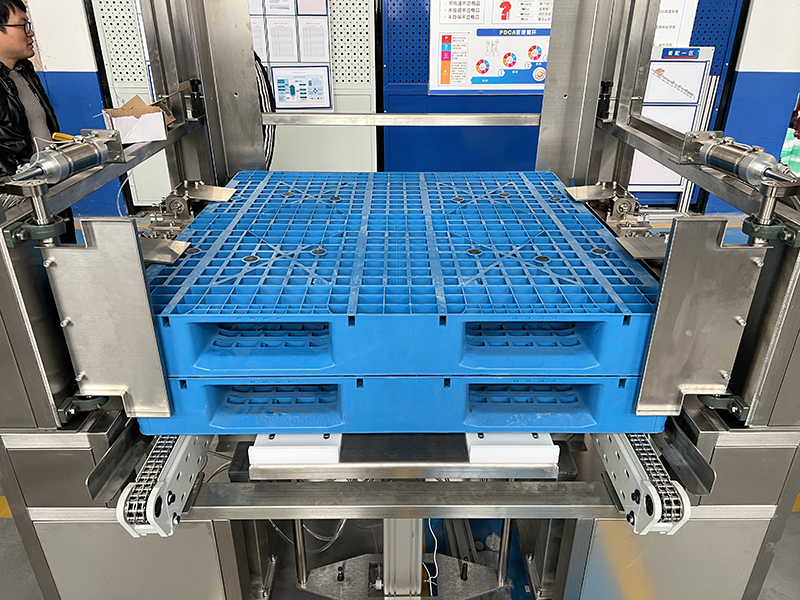
The Integration with Modern Post-Packaging Lines
A robotic palletizing machine rarely operates in isolation. It is the central hub of the post-packaging production line. To understand why firms are choosing robotic over traditional, one must look at the entire ecosystem.
When a product exits the final packaging stage—be it a case sealer or a shrink wrapper—it enters the domain of the automatic palletizing system. Traditional systems require precise, consistent infeed. If the product arrives slightly skewed, the traditional machine might jam. Robotic systems, equipped with 3D vision, can adapt. They see the box, calculate its position, and pick it anyway.
This resilience reduces downtime. After the pallet is built, the load moves to a wrapping machine for stabilization. The synchronization between the palletizing machines and the wrapping machine is critical. If the palletizer slows down, the wrapper must wait. Robotic controllers are adept at managing this dance, using real-time data to optimize the flow of the entire post-packaging production line.
Simplifying Complexity Through Software
Another compelling reason for the shift is the democratization of programming. Traditional palletizing machines often relied on proprietary controllers and required specialized technicians to program. If a pattern needed changing, the line stopped while an expert was called in.
Today's robotic palletizing machines are built with user experience in mind. Operators can drag and drop boxes on a touchscreen to design a new stacking pattern. The robot calculates the most efficient path automatically. This ease of use is vital amid labor shortages because it means the existing workforce can be upskilled quickly.
The automatic palletizing system communicates with the warehouse management system, telling it exactly what product is on the pallet before it even reaches the wrapping machine. This level of data transparency was difficult to achieve with traditional mechanical systems. It allows for better tracking and quality control, ensuring that the wrong product never gets shipped.
Energy Efficiency and Sustainability Goals
Sustainability is no longer a secondary concern. As firms publish net-zero targets, they are scrutinizing every watt of energy consumed on the production floor. Here again, robotic palletizing machines offer an advantage.
Traditional palletizing machines, particularly those that are hydraulic or pneumatic, consume energy constantly, even when idle. Modern robotic systems are designed for energy efficiency. They use regenerative drives and shut down servos when not in motion. When integrated with a modern wrapping machine, which also features energy-efficient film pre-stretch, the entire post-packaging production line reduces its carbon footprint.
Moreover, the precision of robotic palletizing machines means less product damage. Less damage translates to less waste, which aligns with the circular economy goals that many corporations are now prioritizing.
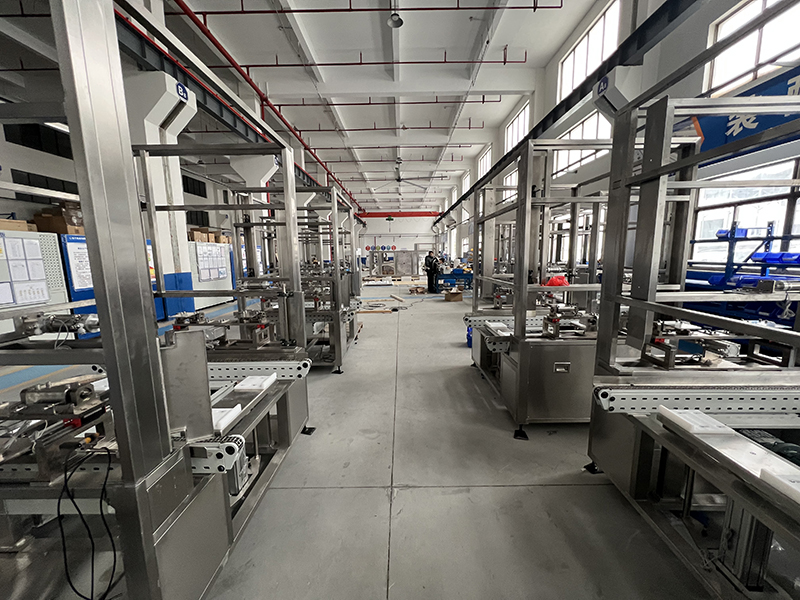
Overcoming the Fear of Complexity
Despite the clear benefits, some firms hesitated to adopt robotic palletizing machines due to perceived complexity. However, integrators have addressed this by creating standardized cells.
A modern robotic automatic palletizing system often arrives as a plug-and-play unit. It includes the robot, the gripper, the infeed conveyor, and the interface to the wrapping machine. The days of months-long installation projects are fading.
These standardized cells are designed to be moved. If a post-packaging production line is reconfigured, the robotic palletizer can often be relocated with relative ease. This asset mobility is something traditional fixed palletizing machines simply cannot offer. It protects the firm's investment against future changes in the production layout.
The Future of the Workforce
Finally, the shift toward robotic palletizing machines is about redefining the workforce, not replacing it. In a tight labor market, younger workers are often reluctant to take on the physical strain of manual palletizing. They seek roles that involve technology and problem-solving.
By installing advanced palletizing machines, companies make their facilities more attractive to this emerging talent pool. The role of the line operator evolves into a technical position, monitoring the performance of the automatic palletizing system and ensuring the wrapping machine has sufficient film.
This technological upgrade signals to the market that the company is modern and forward-thinking. It helps retain the skilled technicians who understand how to keep the post-packaging production line running at peak efficiency.
Conclusion
The prioritization of robotic palletizing machines over traditional models is a logical response to the current labor landscape. It is driven by the need for flexibility, the demand for safer workplaces, and the financial realities of production downtime. As these machines become smarter and more integrated with equipment like the wrapping machine, they transform the post-packaging production line from a cost center into a strategic asset.
Firms are not just buying a robot; they are buying resilience. They are ensuring that regardless of who is available to work, the palletizing machines will continue to build loads, the automatic palletizing system will adapt to new products, and the goods will flow to market without interruption. In an era defined by uncertainty, that reliability is worth the investment.