

In the realm of electronics and 3C (Computer, Communication, and Consumer Electronics) packaging, the old saying in manufacturing, like "predictability is everything," isn't really holding up anymore. This industry isn't just about cranking out the same smartphone model in huge batches for six months straight. Nowadays, contract manufacturers and in-house packaging teams are dealing with a pretty unpredictable scene: high-mix, low-volume (HMLV) production.
For packaging engineers, this shift places unprecedented pressure on the carton erector. Traditionally designed for continuous, high-speed output, the modern erector must now pivot instantly between SKUs without sacrificing throughput. If your current system is still struggling with changeover times measured in hours rather than seconds, you are not just losing efficiency; you are losing the ability to compete.
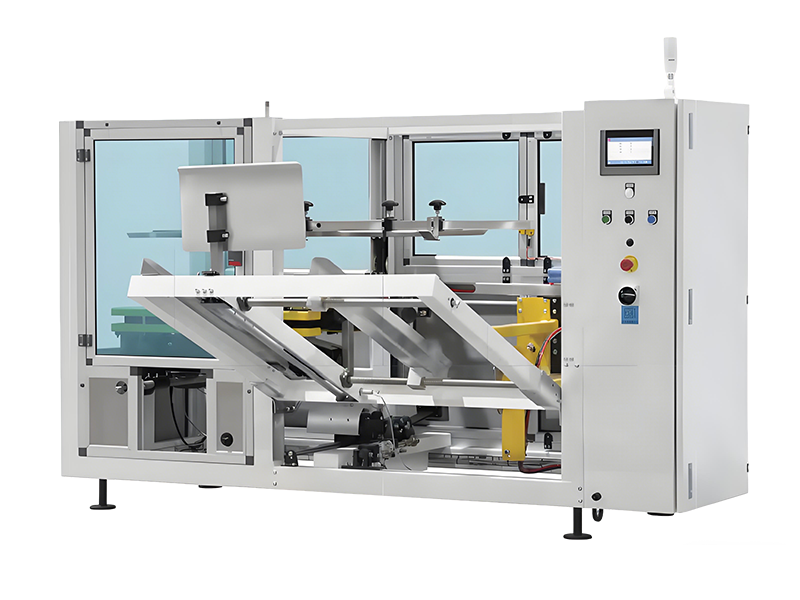
The HMLV Paradox: Speed vs. Flexibility
The core challenge in electronics packaging is the paradox of speed. On one hand, consumer demand for the latest gadgets—wireless earbuds, smartwatches, or gaming peripherals—requires rapid dispatch. On the other hand, the variety of box sizes, inserts, and protective materials required for delicate electronics has exploded.
A standard erector machine operating on a fixed cam system excels at one thing: doing the same motion repeatedly at 200 cycles per minute. However, when the next order requires a box that is 30% smaller with a different flap configuration, that cam-driven system becomes a liability. The physical changeover—changing magazines, adjusting rail guides, and swapping forming tools—can take 45 to 90 minutes.
In an HMLV environment, where batch sizes might drop below 500 units, a 45-minute changeover destroys the economic viability of automation. If your carton erector is not capable of servo-driven, recipe-based changeovers, your packaging line becomes a bottleneck that forces planners to choose between holding excessive inventory or running lines inefficiently.
Beyond the Carton Erector: The Role of the High Speed Carton Erector
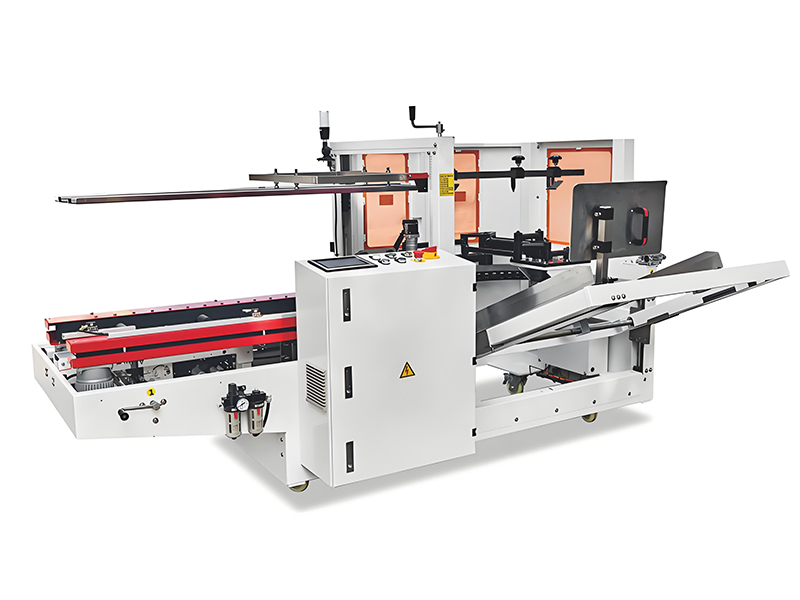
To solve the HMLV puzzle, many electronics logistics hubs are moving away from dedicated case erectors toward a more versatile solution: the random case erector. Unlike traditional machines that require manual adjustments between different box sizes, a random case erector uses advanced sensors and servo motors to automatically detect the dimensions of a flat blank as it enters the magazine.
For electronics contract manufacturers who handle multiple clients—such as one line packaging high-end GPUs and the next packaging IoT sensors—the high speed carton erector is a game-changer. It allows the packaging line to receive mixed pallets of flat corrugated boxes. The machine reads the barcode or physical dimensions of each blank, adjusts its side belts and folding mechanisms in real-time (usually under 3 seconds), and erects the case perfectly.
This technology effectively decouples the carton erector from the constraints of batch sequencing. It enables “chaotic” packaging workflows, where finished goods from assembly can be packed immediately without waiting for a batch changeover, drastically reducing work-in-process (WIP) inventory—a critical metric in electronics manufacturing where component value is high.
Integrating the Mid-Line: Case Sealing Machine Synchronization
Speed is not just about erecting the box; it is about the flow. A common oversight in HMLV lines is the disconnect between the erector and the carton sealing machine. If your erector machine can form a box in two seconds, but the carton sealing machine downstream requires manual intervention to adjust to a new box height, the system fails.
Modern electronics packaging lines require a synchronized axis of motion. The carton sealing machine must be equipped with powered vertical belts and automatic top-head adjustments that receive the same recipe data as the erector. When the erector machine switches to a new product, the carton sealing machine must simultaneously adjust its compression unit and tape heads.
For high-value electronics like motherboards or OLED screens, vibration is the enemy. The integration between the erector and the carton sealing machine must ensure that the box is transferred without jerking or stopping abruptly. A unified control architecture—where one HMI manages both the case forming and the top sealing—reduces the risk of operator error. It ensures that a fragile electronic component, cushioned by ESD-safe foam inside the case, is not subjected to improper compression from a misaligned carton sealing machine during the final closure.
End-of-Line Optimization: Palletizing Machines
Once the electronics are packed and sealed, the final hurdle is unit load formation. The speed of the erector machine is irrelevant if the downstream palletizing machines cannot keep up with the variety of case sizes being produced.
In HMLV environments, mixed-SKU pallets are the standard. Traditional palletizing machines often require fixed patterns. If the erector machine outputs a case of USB hubs, followed by a case of power adapters, the palletizer must have the software intelligence to build a stable, interlocked pallet with varying case dimensions.
Modern palletizing machines equipped with 3D vision systems and AI-driven pattern generation are becoming essential companions to high-speed erectors. They allow for "palletizing on the fly"—adjusting the grip pressure and placement coordinates for every single case that arrives from the carton sealing machine. Without this integration, the speed gains made at the front end of the line are nullified by a manual palletizing bottleneck, increasing labor costs and the risk of repetitive strain injuries among operators handling heavy electronics cartons.
The Digital Twin and Predictive Maintenance
For the electronics industry, where supply chain visibility is paramount, the physical hardware of the erector machine is only half the story. The other half is data.
A modern erector machine should function as an edge device within the Industry 4.0 framework. For high-mix operations, downtime is exponentially more expensive than lost production; it is lost opportunity. If a jam occurs in the random case erector during a critical holiday shipping window, the ripple effects are catastrophic.
Operators are now leveraging digital twins—virtual replicas of the packaging line—to simulate changeovers before they happen. Before a line switches from packaging high-end gaming consoles to compact smart home devices, the digital twin allows engineers to verify that the erector machine, carton sealing machine, and palletizing machines will handle the new case dimensions without physical collision or timing errors.
Moreover, predictive analytics on the erector machine can monitor servo motor torque. In electronics packaging, where dust and static are risks, a slight increase in torque on the erector’s folding arms might indicate a build-up of corrugated dust or a misalignment that could scratch the outer packaging—a cosmetic failure that luxury electronics brands cannot tolerate.
Conclusion
When evaluating whether your erector machine is fast enough for electronics packaging, it is vital to redefine what “fast” means. In a high-mix, low-volume environment, a machine running at 200 cases per minute that requires a 45-minute changeover is slower than a random case erector running at 60 cases per minute with zero changeover downtime.
The optimal packaging ecosystem for modern electronics manufacturing is not a collection of standalone machines but a synchronized suite. It starts with a random case erector that absorbs dimensional variability, flows through a carton sealing machine that adapts in milliseconds, and culminates in palletizing machines that build complex, mixed-load pallets autonomously.
As the lines between contract manufacturing and direct-to-consumer fulfillment blur, the winners will be those who treat their erector machine not as a simple box former, but as the intelligent gateway to a resilient, agile supply chain. If your current setup relies on manual adjustments, fixed cam movements, or disconnected mid-line and end-of-line equipment, the answer is clear: no, it is not fast enough. The future belongs to those who embrace automation that is as flexible as the electronics they package.