

The European Labor Crisis: A Perfect Storm
Europe’s logistics sector is bleeding talent. Recent data from the Savills 2025 European Real Estate Logistics Census confirms what warehouse operators have felt for years: labor availability has overtaken land costs and geopolitical concerns as the most decisive factor for choosing a new logistics site . In late 2025, attrition rates in operations functions spiked by 35%, reaching 21.3%—the highest of any job function across the continent .
The numbers are sobering. Maersk reports that labor shortages have become the number one bottleneck at major European hubs like Rotterdam and Antwerp . The Netherlands alone is experiencing a 14% increase in general attrition as companies compete for the same shrinking pool of transport and warehouse talent . Across the EU27, vacancy rates in logistics now exceed 12% in many regions .
Against this backdrop, the telescopic belt conveyor has emerged not merely as a convenience but as a strategic necessity. This equipment—designed to extend directly into truck trailers and containers—dramatically reduces the physical demands on warehouse staff while accelerating loading and unloading cycles.
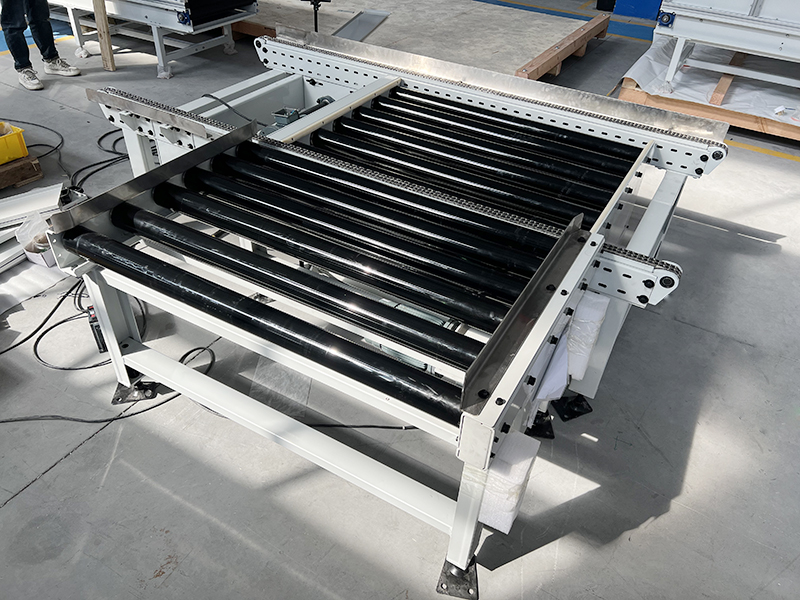
How Telescopic Belt Conveyors Address Workforce Gaps
1. Reducing Physical Strain and Injury Rates
The most immediate impact of the telescopic belt conveyor lies in ergonomics. Traditional manual loading requires workers to walk deep into trailers, lifting and carrying cartons over distances that accumulate into kilometers over a single shift. This physical toll directly contributes to the industry’s high attrition rates.
When a facility installs a telescopic belt conveyor, the loading process transforms. Operators stand at the conveyor’s base while the extendable boom reaches into the trailer, delivering cartons directly to the placement point. For unloading, the reverse holds true: goods travel out of the trailer on the belt, eliminating the need for workers to traverse the trailer floor repeatedly.
This reduction in physical strain has measurable effects on retention. Serendi’s analysis of logistics recruitment reveals that 60% of successful recruiters now hold advanced degrees in psychology, emphasizing that long-term workforce stability depends on reducing the “revolving door” effect caused by physical burnout . Companies leveraging automation like the telescopic belt conveyor report up to 30% lower turnover compared to manual-only operations.
2. Enabling Semi-Skilled Labor Utilization
The telescopic belt conveyor also expands the available labor pool. When loading and unloading no longer require exceptional physical stamina or specialized driving skills, facilities can hire from broader demographics—including older workers, those with physical limitations, and individuals who might otherwise avoid warehouse work.
This aligns with findings from the Zaragoza Logistics Center, which notes that Europe’s workforce transformation requires anticipating how professional skills will evolve and preparing workers for new operational models . The telescopic belt conveyor serves as an entry point: it reduces barriers to employment while allowing workers to develop skills in automated environments.
Integration with End-of-Line Automation: Carton Packers and Strapping Machines
The true potential of the telescopic belt conveyor emerges when it is integrated into broader automated workflows. Two complementary technologies—the carton packer and the automatic strapping machine—transform the loading dock from a labor-intensive bottleneck into a streamlined, semi-automated operation.
Carton Packers: Completing the Upstream Workflow
A carton packer automates the final stage of order fulfillment, erecting cartons, filling them with products, and sealing them for shipment. When positioned upstream of a telescopic belt conveyor, the carton packer creates a continuous flow: sealed cartons move directly onto the conveyor and into waiting trailers without manual handling.
This integration reduces labor requirements at multiple points. Rather than having workers manually pack, seal, and transport cartons, a single operator can monitor both the carton packer and the telescopic belt conveyor, intervening only when exceptions occur.
Automatic Strapping Machines: Securing Loads Without Manual Effort
At the trailer entrance, the automatic strapping machine completes the automation loop. After cartons are loaded via the telescopic belt conveyor, the automatic strapping machine secures pallets or stacks with precision tensioning—a task that traditionally required skilled labor and posed significant injury risks.
Manufacturers like Mosca have advanced this technology significantly. The SoniXs MCB-3, for instance, straps up to 36 corrugated cardboard packages per minute and can now handle stacks up to 400 mm in height—a 12.5% increase over previous models . When integrated with a telescopic belt conveyor, such an automatic strapping machine enables a single operator to manage what previously required three or four workers.
Economic Justification: CAPEX Versus Labor Costs
The adoption of telescopic belt conveyor systems must be evaluated against Europe’s rising labor costs. Wage inflation averaging 6–8% annually across EU27 is tilting the cost-benefit equation decisively toward capital investment .
A complete telescopic conveyor system—including the telescopic belt conveyor, upstream carton packer, and downstream automatic strapping machine—represents a significant capital expenditure. However, this must be weighed against cumulative labor savings. A facility operating three shifts can eliminate 6–8 manual loading positions per dock door, translating to annual savings that often exceed €200,000 per door in high-wage markets like Germany or the Netherlands.
Research and Markets data indicates that the Europe intralogistics automation market is projected to grow at 10.79% CAGR through 2031, with automated conveyors and sorting systems comprising a significant share . This growth is driven precisely by the labor-wage dynamic: companies are finding that automation payback periods now fall within 3–4 years, making the investment justifiable even for mid-sized operators.
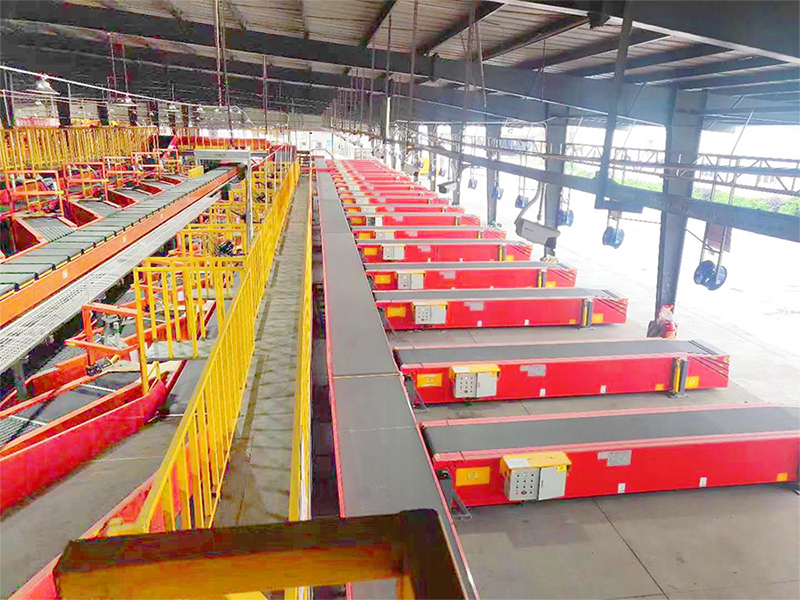
Case Evidence: Automation as Workforce Strategy
German Automotive Logistics
A global automotive parts producer operating across Germany, Poland, Hungary, and the Czech Republic faced fragmented recruitment and extended vacancy periods. By implementing a dual-track RPO model alongside telescopic conveyor system installations, the company reduced recruitment costs by 45% and time-to-hire by 30% .
The telescopic belt conveyor played a central role in this transformation. By reducing the physical demands of loading and unloading, the company could maintain productivity with a smaller, more stable workforce. Long-standing vacancies were eliminated as the facility became more attractive to workers seeking less physically demanding roles.
Dutch E-commerce Fulfillment
In the Netherlands, where e-commerce requires three times the logistics space of traditional retail, labor shortages have become acute. One fulfillment operator integrated telescopic belt conveyor systems with automatic strapping machines from manufacturers like Signode and FROMM, achieving a 40% reduction in loading dock labor requirements .
The automatic strapping machine proved particularly valuable for palletized shipments, where consistent tensioning and load stability are critical. By automating this function, the operator reduced product damage claims by 22% while eliminating the need for specialized strapping labor—a role that had become increasingly difficult to fill.
Technological Evolution: Smarter Conveyors, Smarter Integration
The telescopic belt conveyor of 2026 bears little resemblance to models from a decade ago. Modern systems feature IoT connectivity, predictive maintenance capabilities, and integration with warehouse management systems. When combined with carton packers and automatic strapping machines, these conveyors become nodes in a fully digitized loading operation.
Mosca’s SoniXs MP-7 exemplifies this trend, offering WebHMI and IoT capability that provides performance-related key figures and remote diagnostics . A telescopic conveyor system integrated with such technologies can automatically adjust belt speed based on downstream carton packer output or upstream automatic strapping machine status, optimizing throughput without human intervention.
This digital integration also addresses the skills gap. Rather than requiring workers with physical stamina, modern telescopic belt conveyor operations require workers who can monitor dashboards, interpret alerts, and perform basic troubleshooting—skills that are more readily available and easier to train.
Limitations and Considerations
Despite the compelling case for telescopic belt conveyor adoption, limitations remain. Comprehensive intralogistics automation often requires €5–10 million upfront, a significant hurdle for the SMEs that dominate European logistics . Survey data shows 82% of warehouse leaders remain uneasy about investment volumes despite proven productivity gains.
Additionally, the telescopic belt conveyor cannot solve the labor crisis alone. While it reduces the need for manual loading labor, facilities still require technicians who can maintain automated systems. The ReSKILLING project funded by Horizon Europe recognizes this challenge, promoting new professional skills development for connected and automated mobility .
There is also the question of scalability. The telescopic belt conveyor excels in high-volume, uniform-carton operations but may be less effective for mixed-load or irregular-item shipments. In such environments, the carton packer and automatic strapping machine must be carefully selected to handle the specific product mix.
The Road Ahead: Automation as Essential, Not Optional
Europe’s logistics labor shortage shows no signs of abating. Demographic trends point to an aging workforce, while post-Brexit migration patterns and stringent working-time regulations continue to constrain supply. In this environment, the telescopic belt conveyor—particularly when integrated with carton packers and automatic strapping machines—has transitioned from optional productivity tool to essential operational infrastructure.
The question is no longer whether automation can replace manual loading labor, but whether European logistics operators can afford not to automate. With attrition rates exceeding 20% in core operations functions and wage inflation running at 6–8% annually, the telescopic belt conveyor offers a proven path to workforce stability and operational continuity.
For supply chain leaders facing empty chairs and unfilled shifts, the answer increasingly points in one direction: extending the boom, integrating the conveyor, and letting the telescopic belt conveyor carry the weight that human workers can no longer supply.