

For ages, people just saw the case packer as a boring old piece of equipment—a dependable machine that was good at just one thing: putting products into shipping boxes. But boy, has the world of packaging and logistics changed! With e-commerce blowing up, everyone wanting stuff made just for them, and companies constantly being pushed to cut costs, the big question now isn't whether you should automate. It's whether your current machines can even keep pace anymore.
If your facility still relies on a legacy case packer that operates independently of your warehouse management system, you may be facing a silent profitability crisis. This article explores the benchmarks of modern automation, the hidden costs of outdated equipment, and why upgrading to integrated systems—such as an robotic case packer with smart diagnostics—is no longer a luxury, but a competitive necessity.
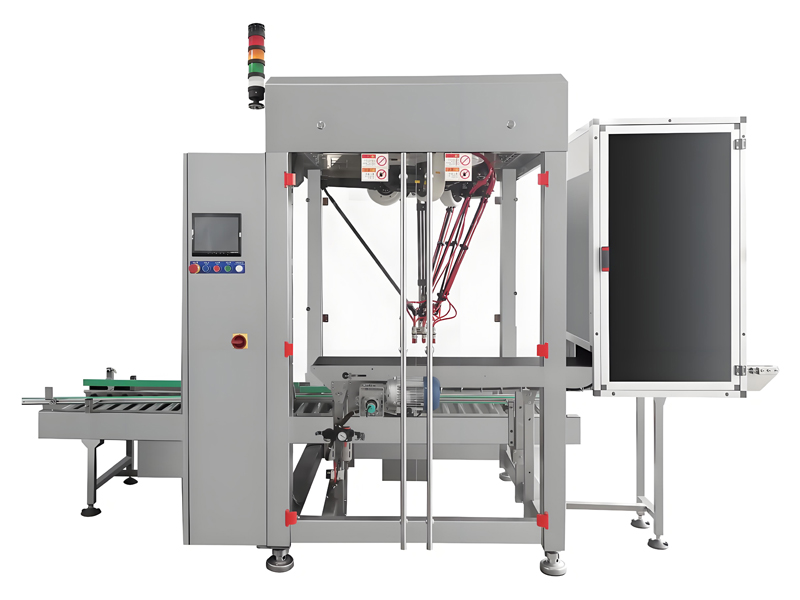
The Definition of Obsolescence: More Than Just Age
A machine’s age is not the sole indicator of obsolescence. A case packer manufactured ten years ago might still cycle reliably, but reliability is only one metric in the modern fulfillment center. True obsolescence is defined by a machine’s inability to integrate, adapt, and communicate.
Legacy equipment typically operates in isolation. It lacks the sensors and Internet of Things (IoT) connectivity required to provide real-time data on uptime, mean time between failures (MTBF), or throughput bottlenecks. In contrast, a modern robotic case packer is designed as a node in a networked ecosystem. It communicates with upstream forming equipment and downstream palletizing units via industrial Ethernet protocols.
When a carton packer cannot report its own performance data to a Manufacturing Execution System (MES) or a Warehouse Control System (WCS), it becomes a "black hole" in the supply chain. Operators lose the ability to perform predictive maintenance, leading to unplanned downtime—the single largest cost driver in high-volume packaging operations.
The Cost of Complexity: SKU Proliferation and Changeover Times
The most significant shift in the packaging industry over the last five years has been the explosion of Stock Keeping Units (SKUs). Where a facility once ran the same product configuration for hours or days, modern lines now face runs measured in minutes. A legacy carton packer, designed for rigid, high-volume runs, often requires manual mechanical adjustments to accommodate different case sizes.
These manual changeovers are fatal to operational efficiency. A changeover that takes 20 to 30 minutes, occurring multiple times per shift, can reduce Overall Equipment Effectiveness (OEE) by 15–20 percent.
Advanced automatic carton packing machine systems have solved this problem through servo-driven adjustments. Modern units utilize recipe-based controls; an operator simply scans a barcode for the new product, and the machine automatically adjusts its case dimensions, packing pattern, and sealing parameters in under 60 seconds. When integrated with a strapping machine and a telescopic belt conveyor, this ecosystem ensures that the flow of goods is never interrupted by mechanical recalibration.
The Sealing and Strapping Bottleneck
One of the most overlooked areas of obsolescence is the integration between primary packing and secondary sealing/strapping. A legacy carton packer often operates independently from the strapping machine located downstream. If the packer runs faster than the strapper can handle, or if the conveyor logic fails to buffer appropriately, the line experiences "starvation" or "blockage."
Modern automation demands synchronization. A high-speed strapping machine paired with a modern carton packer utilizes variable frequency drives (VFDs) and photo-eye sensors to create a "traffic cop" system for cartons. This ensures that the sealing and strapping processes do not become rate-limiting steps.
Furthermore, the telescopic belt conveyor plays a crucial role in bridging these gaps. In facilities dealing with varying trailer heights or dock configurations, a telescopic belt conveyor extends the reach of the automated line directly into the shipping container. When a carton packer is integrated with a telescopic belt conveyor, it eliminates the need for manual staging and loading, reducing labor costs by up to 70 percent for the end-of-line process.
Energy Efficiency and Pneumatic Reliance
Legacy carton packer units are typically heavy consumers of compressed air. Pneumatic cylinders, while reliable, are inherently inefficient. According to industry studies, compressed air systems account for approximately 10–30 percent of a facility’s total energy consumption, and older machines often leak significant volumes of air due to worn seals and dated valve technology.
The new generation of automatic carton packing machine systems is shifting toward electric actuation. Servo-electric drives consume energy only when motion is required, unlike pneumatic systems that require constant pressure. This shift not only reduces the electrical bill but also lowers the noise pollution in the facility, creating a safer and more comfortable working environment.
If your legacy carton packer is still running on a centralized pneumatic system with no energy recovery or monitoring, it is likely contributing to a carbon footprint—and an operational expense—that is double that of modern equivalents.
Labor Dynamics and Ergonomic Failures
The shortage of skilled labor in logistics and manufacturing is well-documented. Legacy machinery exacerbates this problem in two ways. First, older carton packer systems often require a higher degree of manual intervention. Operators are needed to clear jams, manually erect cases when the feeder fails, or push cartons into the strapping machine when the conveyor logic fails.
Second, these machines are frequently ergonomic hazards. If a carton packer is not properly integrated with a telescopic belt conveyor, workers must twist, bend, and lift to move finished cartons onto pallets or trailers. This leads to repetitive strain injuries, high turnover, and increased workers' compensation premiums.
Automation solves the labor equation not by eliminating jobs, but by upskilling them. A modern automatic carton packing machine allows a single operator to manage an entire line—from case erecting to palletizing—via a human-machine interface (HMI). The physical strain is transferred to the machinery, allowing staff to focus on quality control and system optimization rather than brute force.
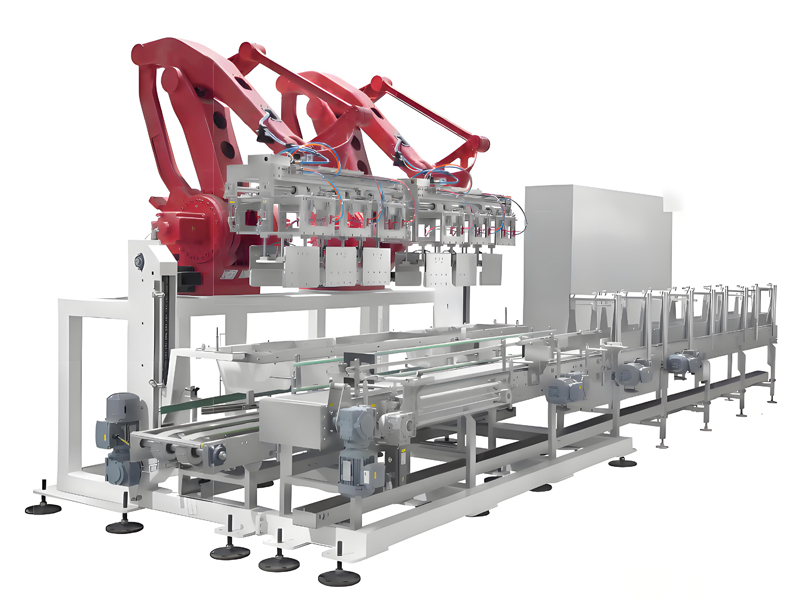
The Integration Imperative: Conveyance and Flow
No piece of packaging equipment operates in a silo. The efficiency of a carton packer is directly tied to the conveyance systems that feed it and the systems that carry its output away. The telescopic belt conveyor has emerged as a critical component in this ecosystem, particularly in distribution centers where trailer loading is a bottleneck.
A fixed conveyor forces the strapping machine and packer to stop frequently to allow for trailer changes or forklift intervention. Conversely, a telescopic belt conveyor extends deep into the trailer, allowing continuous flow from the automatic carton packing machine directly into the truck. This "flow-through" logistics model reduces dock-to-stock times and eliminates the need for staging areas, which are often the largest wasted space in a warehouse.
If your current carton packer is not configured to interface seamlessly with a telescopic belt conveyor, you are likely holding inventory in a buffer zone—a non-value-added activity that increases handling costs and risk of damage.
Future-Proofing: Data, AI, and Predictive Maintenance
Perhaps the strongest argument against legacy equipment is its inability to participate in Industry 4.0. A modern carton packer is equipped with edge computing capabilities. It monitors vibration, temperature, and cycle counts to predict when a component will fail before it does.
For instance, if the sealing mechanism on an automatic carton packing machine begins to show slight temperature deviations, the system can alert maintenance to clean or replace the heating element during a scheduled break, rather than causing a mid-shift breakdown that halts the entire warehouse. Similarly, a strapping machine with smart diagnostics can notify operators of low strapping material or mis-feed risks before they occur.
When integrated with cloud-based analytics, these machines provide actionable insights. A facility manager can compare the performance of a carton packer in one shift versus another, identify training gaps, and optimize line speeds based on real-time demand.
Calculating the Total Cost of Ownership
To determine if your legacy carton packer is obsolete, one must look beyond the purchase price of new equipment and examine the Total Cost of Ownership (TCO) of the old.
Downtime: Older machines average 10–15 percent unplanned downtime. For a line running at $1,000 per hour in labor and overhead, this equates to significant annual losses.
Maintenance: Legacy systems often rely on obsolete parts with long lead times. Expedited shipping and premium parts inflate maintenance budgets.
Labor: Manual intervention required by old carton packer units increases headcount requirements by an average of 2–3 operators per shift.
Damages: Inconsistent case sealing or strapping tension leads to product damage in transit, resulting in returns and chargebacks.
Investing in a new automatic carton packing machine integrated with a modern strapping machine and telescopic belt conveyor typically yields a return on investment (ROI) in 12 to 24 months, solely from labor savings and downtime reduction.
Conclusion: The Verdict on Legacy Systems
The legacy carton packer is not necessarily "junk," but in the context of the automation era, it is increasingly a liability. As supply chains demand agility, transparency, and speed, machines that cannot communicate, adapt, or integrate become the weakest link in the chain.
The modern facility requires an ecosystem: an automatic carton packing machine that handles complex SKUs with servo-driven precision; a strapping machine that secures loads without interrupting flow; and a telescopic belt conveyor that bridges the gap between production and shipping. If your current carton packer cannot be upgraded to meet these standards, it is not just obsolete—it is costing you market share.
Now is the time to audit your end-of-line operations. The era of isolated machinery is over. The era of integrated, intelligent, and autonomous packaging has arrived, and it is redefining what it means to be truly efficient.